Prime Video AI Scene Search: Over 5,000 Movies Enhanced

Prime Video AI Scene Search allows viewers to locate specific movie moments through Alexa+ on compatible Fire TV devices, combining artificial intelligence, natural language processing, and contextual video analysis to simplify content navigation.
The Prime Video AI Scene Search feature introduces a different way for American audiences to interact with their favorite movies, using conversational voice commands to locate memorable scenes.
Officially introduced by Amazon in December 2025, this innovation represents an important development in streaming entertainment, offering alternatives to traditional playback controls and manual searches.
Throughout 2026, this technology remains relevant to discussions about intelligent entertainment systems, personalized content discovery, and the growing influence of artificial intelligence on everyday viewing experiences.
Prime Video Transforms Content Discovery With AI Scene Search
The Prime Video AI Scene Search capability allows eligible viewers to describe memorable cinematic moments using Alexa+, helping compatible Fire TV devices identify and navigate to relevant scenes.
This approach demonstrates how modern streaming technology can extend beyond conventional title searches, providing additional opportunities for audiences to interact with familiar movies through descriptive language.
Instead of repeatedly adjusting playback controls, viewers can request particular moments by describing recognizable characters, memorable dialogue, or important events associated with supported films.
The Development of Scene-Level Search Technology
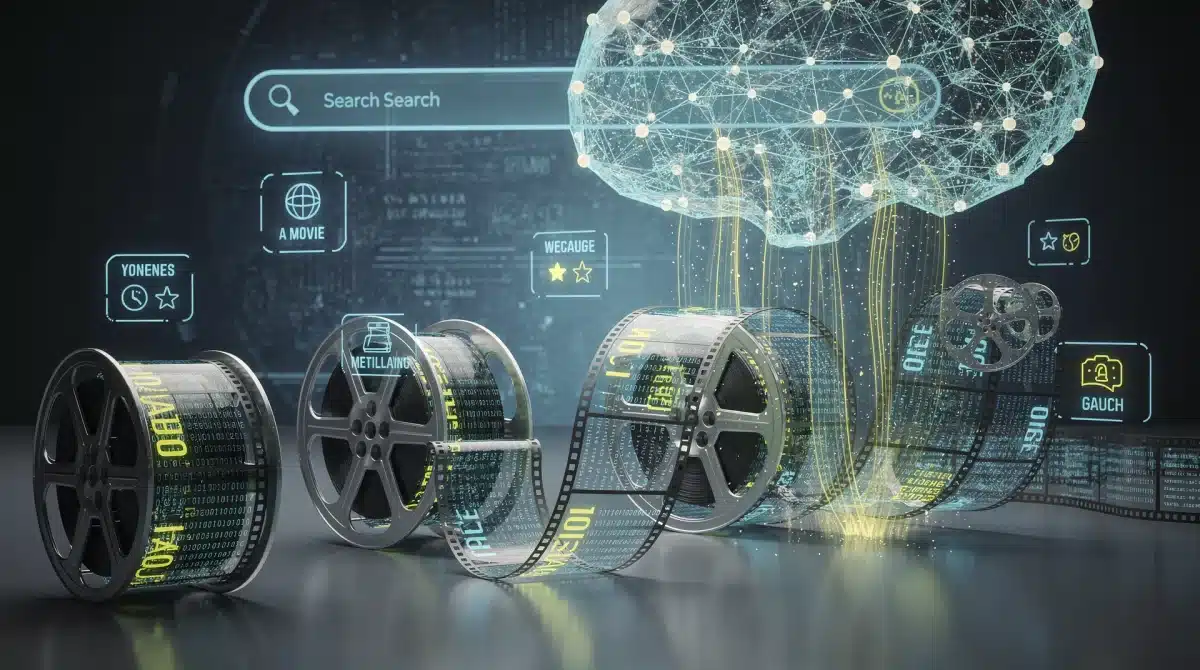
Traditional streaming search systems primarily help audiences locate complete movies or television episodes through information such as production titles, actor names, genres, and available programme descriptions.
Scene-level discovery introduces additional complexity because the system must recognize relationships between user descriptions and specific events occurring within individual productions rather than simply identifying titles.
Prime Video AI Scene Search demonstrates how contextual information can support more detailed navigation, creating opportunities to locate memorable cinematic moments without remembering their exact timestamps.
Impact on User Experience and Engagement
Finding a particular movie scene can become frustrating when viewers remember important details but cannot recall precisely where the moment appears within a lengthy production.
Conversational navigation offers a practical alternative, particularly when audiences want to revisit memorable sequences, share favorite moments with friends, or examine particular developments within a film.
The potential value of Prime Video AI Scene Search depends on accurate scene identification, supported content availability, compatible equipment, and the clarity of individual search requests.
How Prime Video AI Scene Search Works
The Prime Video AI Scene Search feature combines conversational input with contextual movie information, allowing viewers to request particular moments through compatible Alexa+ entertainment experiences.
Rather than requiring audiences to remember playback timestamps, the system interprets descriptions that may contain character names, recognizable events, dialogue references, or other relevant contextual details.
When an appropriate match is identified within supported content, Fire TV can navigate to the requested scene, reducing the need for traditional fast-forwarding or manual searching.
Technical Architecture Behind the Innovation
Amazon’s scene navigation capability uses artificial intelligence supported by visual content analysis and information obtained from movie captions, helping establish meaningful relationships between descriptions and scenes.
The official Amazon Web Services technology overview identifies Amazon Bedrock, Prime Video X-Ray, Amazon Nova, and Anthropic Claude as components supporting this intelligent entertainment experience.
These technological foundations illustrate how different artificial intelligence systems can work together to interpret conversational requests and retrieve relevant information from supported audiovisual productions.
Understanding Natural Language Processing
Natural language processing helps computer systems interpret ordinary human communication, including descriptions that may contain incomplete information, alternative wording, or references to familiar fictional characters.
Within Prime Video AI Scene Search, conversational interaction reduces dependence on rigid search commands, allowing viewers to communicate their intentions using language that feels more natural.
However, the system’s ability to recognize a requested scene may vary according to the available content information, the specificity of the description, and other technical limitations.
User Interface and Accessibility Considerations
Voice-controlled entertainment navigation may provide practical advantages for individuals who prefer speaking rather than repeatedly entering text through conventional television remotes and on-screen keyboards.
Prime Video AI Scene Search can also offer a convenient alternative for viewers who experience difficulties remembering exact playback positions within lengthy movies or complicated narratives.
Nevertheless, consumers should confirm device compatibility, Alexa+ availability, language support, and existing accessibility settings before assuming that the feature will accommodate every individual viewing requirement.
Expanding Content Horizons Across Thousands of Movies
Amazon initially described its scene navigation technology as supporting thousands of Prime Video movie titles and numerous individual cinematic moments across its available entertainment library.
However, the precise claim that more than 5,000 movies were included in the initial release should not be treated as an independently confirmed official catalog figure.
The practical reach of Prime Video AI Scene Search depends on which productions have compatible scene information and whether users possess the necessary viewing access.
Supported Movies and Content Availability
Movie availability can depend on regional licensing agreements, subscription arrangements, purchasing options, rental conditions, and changes affecting the entertainment catalog accessible to individual Prime Video customers.
Having access to a particular movie does not necessarily mean every scene associated with that production will be available through advanced artificial intelligence navigation features.
Viewers interested in Prime Video AI Scene Search should therefore test supported titles directly rather than assuming identical functionality across every movie available through the service.
Potential Expansion Across Additional Film Genres
Scene-level navigation could provide useful applications across different entertainment genres, including action movies, romantic comedies, historical dramas, animated productions, musicals, and psychological thrillers.
Each genre presents different opportunities for descriptive searching, from recognizable action sequences and musical performances to emotional conversations and visually distinctive moments within individual productions.
Expanding compatible content could make these capabilities more useful, although future improvements depend on Amazon’s development priorities, technical requirements, and decisions concerning its supported entertainment library.
Beyond Movies: Potential for Television Series Integration
Applying similar technology to episodic entertainment could help viewers revisit memorable conversations, important character developments, and significant events occurring throughout different seasons of television productions.
Amazon identified television content as a potential area of expansion when introducing its scene navigation functionality, although availability depends on subsequent feature development and implementation.
Audiences should distinguish announced expansion plans from currently available capabilities before assuming that every television series supports the same navigation experience as compatible Prime Video movies.
How to Use Prime Video AI Scene Search
Using the scene navigation feature begins with confirming access to a compatible Fire TV device, an eligible Alexa+ experience, and a supported Prime Video movie.
Viewers can then describe the cinematic moment they want to revisit, providing recognizable details that help distinguish the requested sequence from other scenes within the production.
Successful Prime Video AI Scene Search requests can reduce manual navigation, although users may occasionally need to provide additional information when their initial descriptions are ambiguous.
Creating Effective Scene Search Requests
Detailed descriptions can improve the usefulness of conversational searches, particularly when users mention the movie’s title alongside recognizable characters, settings, actions, or other distinctive narrative elements.
For example, a viewer might request the moment when two specific characters meet for the first time or describe an important confrontation occurring within a familiar setting.
These requests illustrate how ordinary language can support more targeted content navigation without requiring audiences to remember exact chapter divisions or playback positions.
What to Do When a Scene Cannot Be Found
An unsuccessful search may occur when the requested movie is unsupported, the description lacks distinguishing information, or the system cannot identify an appropriate match.
Providing additional context, clarifying character names, or identifying the movie more precisely may help improve the likelihood of locating the intended cinematic moment.
If Prime Video AI Scene Search remains unsuccessful, traditional playback controls continue offering a practical alternative for navigating to the desired sequence manually.
Competitive Implications for the Streaming Industry
Artificial intelligence is becoming increasingly relevant across the competitive streaming landscape, where companies explore different ways to improve entertainment discovery and strengthen their relationships with subscribers.
Scene-level navigation represents one approach to differentiating entertainment experiences by introducing additional functionality beyond conventional recommendations, title searches, and personalized programme suggestions.
Prime Video AI Scene Search demonstrates a potential advantage in content interaction, although comparisons with competing platforms require evaluating their respective capabilities and supported viewing environments.
Establishing New Expectations for Entertainment Search
Conventional streaming platforms generally organize their discovery experiences around programme categories, searchable titles, recommended content, recently watched productions, and personalized entertainment collections.
More detailed conversational search capabilities could encourage audiences to expect greater flexibility when interacting with individual movies rather than simply choosing which production to watch.
However, the broader adoption of scene-level technology will depend on its reliability, practical usefulness, operating expenses, and successful integration into established entertainment systems.
Long-Term Applications of AI in Streaming
Entertainment companies continue exploring the possibilities of integrating AI deeply into their services, including personalized recommendations, contextual information, accessibility improvements, and alternative approaches to discovering available productions.
Prime Video AI Scene Search illustrates how conversational systems may support direct interactions with entertainment content instead of operating exclusively as recommendation engines.
Future developments could create additional opportunities for customized viewing experiences, although proposed capabilities should remain clearly distinguished from features officially released and available to consumers.
Technical Challenges Behind AI Scene Search
Developing scene-level navigation presents considerable technical challenges because movies contain complex visual sequences, overlapping conversations, background sounds, changing environments, and numerous interconnected narrative developments.
Artificial intelligence systems must interpret relationships between descriptive user requests and available multimedia information while identifying relevant moments within supported entertainment productions.
The effectiveness of Prime Video AI Scene Search therefore depends on factors including contextual accuracy, information quality, processing efficiency, and the ability to recognize ambiguous descriptions.
Data Volume and Processing Efficiency
Large entertainment catalogs contain substantial amounts of audiovisual information, making the organization of scene-related descriptions and other contextual details an important technical consideration.
Efficient information retrieval can help reduce delays between conversational requests and playback navigation, particularly when systems must distinguish similar scenes occurring across numerous supported productions.
Cloud-based computing provides possible solutions for these processing requirements, although specific internal performance metrics and infrastructure configurations should not be assumed without official technical documentation.
Addressing Ambiguity in User Queries
Viewers frequently remember cinematic moments differently, using descriptions influenced by personal interpretations, incomplete memories, familiar character names, or distinctive aspects of particular visual sequences.
Prime Video AI Scene Search must accommodate varying descriptions while distinguishing moments that share similar language, settings, actions, or dialogue across different supported movies.
Providing additional contextual information may help reduce ambiguity, particularly when a requested moment resembles several other scenes within the same production or wider entertainment catalog.
Maintaining Accurate Contextual Information
Scene identification depends on recognizing important relationships between characters, events, visual environments, and other contextual information that contributes to the meaning of individual cinematic moments.
Incorrect associations may result in playback beginning at an unintended location, demonstrating why accurate contextual understanding remains important when implementing advanced conversational navigation systems.
Continued improvements to artificial intelligence technology could help address these limitations, although perfect scene recognition should not be assumed or guaranteed across every supported production.
User Feedback and Potential Future Enhancements
The practical value of scene navigation depends on real viewing experiences, including whether audiences find conversational requests more convenient than established playback controls and manual searching.
Potential evaluation criteria include search responsiveness, accuracy, supported movie selection, ease of use, device compatibility, and the ability to interpret different descriptions of cinematic moments.
Although Prime Video AI Scene Search offers promising functionality, broad claims about overwhelmingly positive subscriber feedback require reliable supporting research or officially published user satisfaction data.
Continuous Development and Feature Improvements
Artificial intelligence technologies frequently evolve as developers introduce new capabilities, improve existing models, and address limitations identified through technical evaluations and product usage.
Potential improvements to scene navigation could include wider content compatibility, more accurate contextual matching, improved conversational understanding, and additional ways to interact with supported entertainment devices.
However, these possibilities should not be interpreted as confirmed release schedules unless Amazon publishes specific announcements concerning forthcoming functionality and expected availability.
Community Engagement and Feature Requests
Consumer experiences can provide useful insights into the accessibility, convenience, and reliability of entertainment features, particularly when users encounter unexpected limitations during everyday viewing activities.
Subscribers experiencing difficulties with Prime Video AI Scene Search can consult available customer support resources and provide feedback through appropriate Amazon service channels.
Constructive feedback may help identify practical improvements, although it does not guarantee that specific feature requests will appear in future entertainment device or application updates.
Security and Privacy Considerations for AI Scene Search
Conversational entertainment features raise important privacy questions because voice-enabled services may process user requests, interaction information, device settings, and other data associated with their operation.
Consumers using Prime Video AI Scene Search should understand that analyzing movie content and processing individual search requests represent separate technological activities with potentially different privacy implications.
Reviewing applicable Amazon privacy information and Alexa settings can help users make informed decisions about their interactions with conversational entertainment services and compatible household devices.
Data Handling and Anonymization
Artificial intelligence services may rely on different categories of information to provide requested functionality, improve system performance, maintain operational security, and support applicable customer service requirements.
Consumers should not assume that all Prime Video AI Scene Search requests are immediately anonymized, automatically deleted, or exclusively used for artificial intelligence model improvement.
Specific data retention practices, privacy controls, and information-processing arrangements should be evaluated through the applicable official policies rather than unverified descriptions of internal technical procedures.
Responsible and Ethical AI Development
Responsible artificial intelligence development involves important considerations such as transparency, privacy protection, accessibility, reliability, and the potential consequences of incorrect or misleading automated responses.
For entertainment navigation, these principles include helping users understand feature limitations while providing practical options for managing their interactions with conversational technologies and connected devices.
Clear communication about Prime Video AI Scene Search capabilities can help establish realistic expectations without suggesting that artificial intelligence systems are universally accurate or completely free from errors.
Device Compatibility and Viewing Requirements
The scene navigation capability is associated with Alexa+ and compatible Fire TV experiences, rather than an automatically available search function across every version of the Prime Video application.
Consumers should review their device capabilities, account eligibility, service availability, and access to supported movies before attempting to locate particular cinematic moments through conversational requests.
Prime Video AI Scene Search may not operate identically across smartphones, tablets, smart televisions, and other playback environments because individual devices support different entertainment features.
Subscription, Rental, and Purchase Considerations

Accessing a supported movie generally requires the production to be available through an eligible subscription arrangement or an applicable Prime Video rental or purchase.
Consumers should distinguish the ability to identify a movie scene from the separate requirement to possess legitimate viewing access to the corresponding entertainment production.
Artificial intelligence navigation does not remove rental charges, purchasing requirements, subscription conditions, or other restrictions associated with the availability of individual movies.
Key Features and Limitations of Prime Video AI Scene Search
Scene-level navigation offers a more conversational approach to revisiting movie moments, helping audiences explore supported entertainment content without relying exclusively on traditional timeline controls.
Prime Video AI Scene Search combines artificial intelligence and contextual movie information, although its practical usefulness remains dependent on compatible devices, available titles, and appropriate access.
The following table summarizes the main capabilities and considerations associated with this technology, helping viewers understand both its potential advantages and important practical limitations.
| Key Feature | Brief Description |
|---|---|
| AI Scene Search | Locate supported movie moments through conversational descriptions. |
| Thousands of Movies | Amazon confirmed thousands of supported titles without specifying an exact total of 5,000 movies. |
| Enhanced Discovery | Uses contextual information to support more detailed entertainment navigation. |
| User Experience | Offers an alternative to manual searching and repeated fast-forwarding. |
| Alexa+ Integration | Supports conversational voice requests on compatible Fire TV devices. |
| Viewing Access | Requires legitimate access to supported movie titles through membership, rental, or purchase. |
| Device Compatibility | Availability depends on compatible equipment and supported Alexa+ functionality. |
| Privacy Considerations | Users should consult applicable Amazon privacy policies and Alexa settings. |
Frequently Asked Questions About Prime Video’s AI Scene Search
Prime Video AI Scene Search refers to Amazon’s intelligent scene navigation feature, which allows eligible viewers to describe particular movie moments through Alexa+ and navigate to relevant scenes on compatible Fire TV devices.
Amazon officially announced support for thousands of movies and tens of thousands of indexed scenes. However, the original announcement did not confirm an exact catalog size of 5,000 movie titles.
Amazon identified television series as a potential expansion area when launching the feature. Consumers should review current official compatibility information to determine whether particular episodic productions are supported.
The main potential benefits include more convenient scene navigation, reduced manual searching, conversational interaction, and easier access to memorable cinematic moments within supported movie titles.
Users should consult Amazon’s applicable privacy policies and Alexa settings to understand how voice requests and interaction information may be processed. Universal immediate anonymization of all scene search requests has not been independently established.
Amazon officially announced the launch of its Alexa+ scene navigation capability for Fire TV on December 3, 2025. It represents an established development relevant to intelligent streaming experiences throughout 2026.
No. The original implementation is associated with compatible Fire TV devices and Alexa+. Viewers should confirm current device support rather than assuming universal compatibility across all Prime Video applications.
The feature may identify movies using recognizable descriptions without requiring their exact titles. However, providing additional information can help when the requested scene is difficult to distinguish.
No. Artificial intelligence navigation does not remove existing subscription, rental, or purchase requirements. Users must have legitimate access to the corresponding supported movie.
No. Results may vary depending on the supported movie, available scene information, request specificity, and the system’s contextual understanding. Additional descriptive details may help when initial searches are unsuccessful.
Conclusion: The Future of Intelligent Streaming
The Prime Video AI Scene Search feature demonstrates how conversational artificial intelligence can introduce alternative approaches to entertainment navigation, helping viewers revisit memorable moments within supported movies.
Possible future developments involving additional productions and TV series could create further opportunities for intelligent content discovery, although specific capabilities remain dependent on official implementation and availability.
By understanding device requirements, viewing permissions, privacy considerations, and technical limitations, audiences can establish realistic expectations while exploring the evolving relationship between artificial intelligence and digital entertainment.