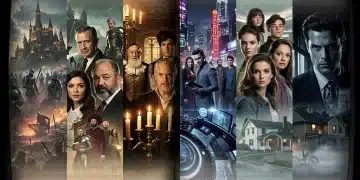
Ensemble Cast Power: 6 Series Excel with Diverse Actors

The breakdown The Power of the Ensemble Cast: How 6 Series Excel with Their Diverse Group of Actors examines how collective acting talent drives successful television today.
This concise analysis focuses on strategic casting, character development, and narrative structures, offering verified insights into how these six prominent series leverage ensemble dynamics to create complex, critically acclaimed stories.
Understanding the Core of Ensemble Cast Power
The success of many iconic television series hinges significantly on the collective strength of their cast, a phenomenon often referred to as ensemble cast power.
This goes beyond mere star power, focusing instead on the synergistic interactions and balanced contributions of multiple leading actors.
When a series successfully cultivates an ensemble, each character, regardless of screen time, feels essential to the narrative fabric.
This intricate web of relationships and individual arcs creates a richer, more immersive viewing experience for the audience.
The strategic deployment of diverse acting talents within an ensemble allows for a broader exploration of themes and perspectives, making the storytelling more nuanced and universally appealing.
This diversity is not just about demographics, but also about acting styles and character archetypes.
Defining True Ensemble Dynamics
True ensemble dynamics are characterized by a delicate balance where no single character overshadows the others, but rather, each character’s presence amplifies the impact of the collective.
This requires a script that provides substantial material for all principal actors, allowing them to showcase their range.
The writing must intricately weave together multiple storylines, ensuring that each character’s journey contributes meaningfully to the overarching narrative.
This interconnectedness is what truly defines the strength and cohesion of an ensemble, making every character indispensable.
Moreover, the success of an ensemble often relies on the off-screen chemistry and collaborative spirit among the actors.
This genuine camaraderie translates onto the screen, making their interactions feel authentic and their relationships believable to the audience.
- Balanced character arcs and screen time distribution among principal actors.
- Interconnected storylines that highlight mutual dependencies and collective growth.
- Authentic on-screen chemistry fostered by strong off-screen collaboration.
The Impact on Narrative Depth and Viewer Engagement
A well-executed ensemble significantly deepens the narrative, allowing for complex explorations of human relationships, societal issues, and personal struggles. Viewers become invested not just in one protagonist, but in a whole community of characters.
This broadens the emotional spectrum of the series, as audiences experience joy, sorrow, triumph, and conflict through multiple lenses. The ability to empathize with a diverse group of characters creates a more profound and lasting connection.
Ultimately, the enhanced narrative depth and heightened viewer engagement are direct results of the collaborative brilliance inherent in ensemble cast power. It transforms a simple story into a multifaceted world that viewers eagerly return to.
Case Study 1: Game of Thrones – A Masterclass in Ensemble Storytelling
When discussing The Power of the Ensemble Cast: How 6 Series Excel with Their Diverse Group of Actors, Game of Thrones immediately comes to mind as a prime example.
The series masterfully balanced a sprawling cast, each character integral to the complex political and fantastical narrative.
From kings and queens to knights and peasants, every actor, regardless of their initial standing, had the potential for significant character development and impact.
This unpredictability kept viewers on the edge of their seats, investing deeply in a multitude of fates.
The show’s ability to introduce, develop, and often eliminate characters with such gravitas underscored the collective strength rather than relying on a single hero. This approach made every death impactful and every alliance pivotal.
Diverse Characters, United Narrative
The vast world of Westeros and Essos allowed for an unparalleled diversity in character types, backgrounds, and motivations. This rich tapestry of personalities helped to ground the fantastical elements in relatable human drama.
Actors like Peter Dinklage (Tyrion Lannister), Emilia Clarke (Daenerys Targaryen), and Kit Harington (Jon Snow) delivered performances that were individually brilliant, yet collectively formed a cohesive and compelling narrative.
Their interactions, often across vast distances, propelled the story forward.
The show’s narrative structure, with its multiple converging and diverging plotlines, demanded an ensemble that could carry the weight of the story from various perspectives. This ensured that no single viewpoint dominated, offering a mosaic of experiences.
- Multiple protagonists with equally compelling storylines.
- Interweaving plot threads that highlight the interconnectedness of characters.
- Unpredictable character fates reinforcing the importance of the collective.
The Unforgettable Impact of Collective Performances
The collective performances in Game of Thrones were instrumental in creating some of television’s most iconic moments. Whether it was a tense council meeting or a brutal battle, the interactions between characters felt authentic and earned.
The show’s critical acclaim and massive global following are a testament to how effectively its ensemble cast brought George R.R. Martin’s intricate world to life. Each actor contributed a vital piece to the grand puzzle, making the overall experience unforgettable.
This collective brilliance demonstrated that a series could thrive not by focusing on one central figure, but by empowering a diverse group of actors to tell a multifaceted story. It truly embodied the essence of ensemble cast power.
Case Study 2: The Office (US) – Comedy Through Collective Quirks
Moving from epic fantasy to workplace comedy, The Office (US) stands as a perfect illustration of ensemble cast power in a different genre.
The show’s humor and heart derived almost entirely from the distinct, often eccentric personalities of its Dunder Mifflin employees.
Each character, from Michael Scott’s cringe-worthy management to Dwight Schrute’s bizarre antics, contributed a unique comedic flavor that blended seamlessly with the others.
This created a rich environment for both planned jokes and improvisational brilliance.
The series demonstrated that a cohesive ensemble could elevate mundane office life into something genuinely hilarious and deeply touching.
The relatability of the characters, despite their quirks, was key to its enduring appeal and its embodiment of ensemble cast power.
Developing Distinct, Relatable Personalities
The writing team meticulously crafted each character, giving them specific traits, catchphrases, and emotional arcs that made them instantly recognizable and beloved.
This allowed for endless comedic possibilities through their interactions.
Actors like Steve Carell (Michael Scott), Rainn Wilson (Dwight Schrute), and John Krasinski (Jim Halpert) became synonymous with their roles, their performances so intertwined that it’s hard to imagine the show without any one of them.
Their chemistry was palpable and authentic.
The show’s mockumentary style further enhanced the ensemble feel, allowing characters to break the fourth wall and offer personal insights, deepening the audience’s connection to the entire cast rather than just a few leads.
- Unique character traits that create comedic and dramatic tension.
- Actors fully embodying their roles, making them iconic.
- Documentary style fostering intimacy with a broad cast.
The Art of Collaborative Comedy
The comedic genius of The Office was a direct result of its collaborative nature. Many of the show’s most memorable moments stemmed from the actors playing off each other, reacting in character to unexpected situations.
This collective improvisation and shared understanding of their characters’ dynamics created a natural flow of humor that felt organic and unforced. It was a testament to the actors’ ability to work as a unit, enhancing each other’s performances.
The series proved that a strong ensemble could sustain a show for many seasons, evolving its humor and emotional depth through the continuous interplay of its diverse cast. This collective effort truly defined its ensemble cast power.
Case Study 3: Friends – The Quintessential Sitcom Ensemble
When discussing The Power of the Ensemble Cast: How 6 Series Excel with Their Diverse Group of Actors, Friends is often cited as the gold standard for sitcom ensembles.
The show’s premise was built entirely around the lives and relationships of six distinct personalities living in New York City.
Each character – Rachel, Monica, Phoebe, Joey, Chandler, and Ross – was given equal footing, with storylines often rotating between them or weaving their individual crises into a collective experience.
This ensured that no single friend was ever truly the ‘main’ character.
The series demonstrated that genuine chemistry and balanced character development among a small, core group could create a global phenomenon.
Their interactions, both comedic and dramatic, formed the heart of the show and cemented its ensemble cast power.
Six Distinct Voices, One Shared Experience
The brilliance of Friends lay in its ability to give each character a unique voice, perspective, and set of quirks, while simultaneously making their collective friendship utterly believable.
Viewers saw themselves in aspects of each character, fostering deep connection.
The actors – Jennifer Aniston, Courteney Cox, Lisa Kudrow, Matt LeBlanc, Matthew Perry, and David Schwimmer – became household names, their individual talents merging to create a comedic and emotional synergy.
Their on-screen bond felt incredibly real.
The show’s format, often centered around their apartment or Central Perk, emphasized their constant interaction and interdependence. This confined setting highlighted how crucial each member was to the group’s dynamic.
- Equal screen time and storyline importance for all six main characters.
- Unwavering chemistry that made their friendship feel authentic.
- Diverse personalities complementing each other’s comedic and dramatic beats.
Legacy of Relatable Relationships
The enduring legacy of Friends is largely due to its portrayal of relatable relationships and the universal themes of friendship, love, and navigating adulthood.
The ensemble cast made these experiences feel deeply personal and universally understood.
Their collective journey through life’s ups and downs resonated with millions, proving that a strong ensemble could create characters who felt like actual friends to the audience.
This deep connection is a testament to the show’s exceptional ensemble cast power.
The series continues to be beloved decades later, a clear indication of how well-crafted ensemble dynamics can transcend time and cultural shifts, remaining relevant and entertaining for new generations of viewers.
Case Study 4: Breaking Bad – Supporting the Anti-Hero’s Descent
While often seen as Bryan Cranston’s tour de force, Breaking Bad also exemplifies ensemble cast power by showcasing how a strong supporting cast can elevate a central narrative.
The series meticulously built a world populated by characters crucial to Walter White’s transformation.
Jesse Pinkman (Aaron Paul), Skyler White (Anna Gunn), Hank Schrader (Dean Norris), and Saul Goodman (Bob Odenkirk) were not mere accessories; their individual arcs and moral dilemmas were as compelling as Walter’s, driving the plot and providing crucial counterpoints.
This intricate web of relationships and consequences highlighted how each character’s choices profoundly impacted Walter’s journey, making the series far more than a one-man show.
It demonstrated the subtle yet powerful influence of ensemble cast power.
Complex Supporting Arcs Fueling the Main Plot
The brilliance of Breaking Bad‘s ensemble lies in how its supporting characters possessed their own fully fleshed-out lives, desires, and moral struggles. Jesse’s journey from a naive drug dealer to a tormented soul was as central as Walter’s.
Skyler’s desperate attempts to protect her family, Hank’s relentless pursuit of Heisenberg, and Saul’s morally ambiguous legal advice all provided necessary tension and depth.
These characters were not static; they evolved and reacted to Walter’s escalating criminality.
The series skillfully used these diverse perspectives to explore themes of morality, consequence, and corruption from multiple angles, preventing the narrative from becoming one-dimensional. This strategic use of an ensemble was masterful.
- Supporting characters with distinct, evolving moral compasses.
- Interdependent relationships that drive both conflict and resolution.
- Diverse character reactions highlighting the ripple effects of the protagonist’s actions.
The Unavoidable Interconnectedness of Fate
The interconnectedness of the characters’ fates in Breaking Bad was a defining feature, demonstrating that no one existed in a vacuum. Every decision made by Walter had profound, often devastating, consequences for those around him.
This narrative strategy made the series incredibly gripping, as viewers witnessed the slow, agonizing destruction of a family and a community. The collective performances underlined the tragic inevitability of their intertwined destinies.
Ultimately, Breaking Bad proved that ensemble cast power isn’t just about equal screen time, but about the profound impact each character has on the overall story and its thematic resonance. It was a symphony of compelling performances.
Case Study 5: The Crown – Royal Drama Through Shifting Perspectives
The Crown offers a unique perspective on The Power of the Ensemble Cast: How 6 Series Excel with Their Diverse Group of Actors by frequently recasting its principal roles to portray the aging of the British Royal Family.
This innovative approach demands a consistently strong ensemble across different generations of actors.
Each season, new actors take on iconic roles like Queen Elizabeth II, Prince Philip, and Princess Margaret, yet the integrity and continuity of the characters remain intact.
This requires an exceptional level of collaborative acting and shared understanding of the roles.
The series successfully navigates complex historical events and personal dramas through the eyes of multiple family members and political figures, ensuring no single perspective dominates.
This showcases a different facet of ensemble cast power.
Seamless Transitions and Character Continuity
The ability of The Crown to maintain character continuity despite major cast changes every two seasons is a remarkable feat of ensemble acting and directorial vision.
Each new set of actors brings fresh interpretations while honoring the established essence of their predecessors.
Actors like Claire Foy, Olivia Colman, and Imelda Staunton each brought their distinct talents to the role of Queen Elizabeth II, yet collectively built a coherent portrayal of the monarch across decades.
This collaborative effort made the transitions seamless for viewers.
The series excels at presenting both the public duties and private struggles of the royals, often contrasting their individual experiences with the collective weight of the monarchy.
This provides a multifaceted view of history and personal sacrifice.
- Consistent character portrayals across different actors and seasons.
- Exploration of historical events through multiple royal perspectives.
- Strong supporting cast providing context and driving subplots.
A Collective Portrayal of History and Monarchy
The Crown is not just the story of one monarch, but of an entire institution and the individuals who serve it.
The ensemble cast allows for a rich exploration of the various personalities and their often-conflicting roles within the royal family and British society.
The series deftly weaves together political intrigue, personal sacrifices, and societal changes, with each character contributing to the grand tapestry of recent British history.
The collective strength of the performances makes this complex narrative accessible and engaging.
This innovative use of an evolving ensemble demonstrates that ensemble cast power can be sustained and even enhanced through strategic recasting, proving that the strength of the story and characters can transcend individual actors over time.
Case Study 6: Succession – The Dysfunctional Family at its Peak
In the realm of contemporary drama, Succession stands out as a masterclass in The Power of the Ensemble Cast: How 6 Series Excel with Their Diverse Group of Actors, revolving around the cutthroat dynamics of the Roy family and their media empire.
The show’s brilliance is rooted in the complex, often toxic, interactions between its core players.
Each member of the Roy family – Logan, Kendall, Shiv, Roman, and Connor – along with key associates like Tom and Greg, is meticulously crafted and played with incredible depth.
Their shared history, ambition, and dysfunction create a constantly shifting power dynamic that drives the entire series.
The series thrives on the tension and dark humor generated by this tightly knit, yet deeply fractured, group.
The collective performances are so intertwined that separating individual brilliance from the ensemble’s overall impact is nearly impossible, showcasing true ensemble cast power.
Interlocking Ambitions and Relentless Power Plays
The narrative of Succession is built on interlocking ambitions, betrayals, and fleeting alliances within the Roy family.
Each character believes they are destined to lead, creating a constant state of internal conflict that is both compelling and darkly comedic.
Actors Brian Cox (Logan Roy), Jeremy Strong (Kendall Roy), Sarah Snook (Shiv Roy), Kieran Culkin (Roman Roy), and Matthew Macfadyen (Tom Wambsgans) deliver performances that are individually outstanding, yet gain immense power when played off against each other.
The dialogue, sharp and often biting, is a character in itself, requiring the ensemble to deliver complex emotional beats and subtle power shifts with precision. This elevates every scene, making every interaction a high-stakes negotiation.
- Deeply flawed characters with intertwined destinies and desires.
- Sharp, character-driven dialogue that fuels dramatic tension.
- Constant shifts in power dynamics within a confined family unit.
The Uncomfortable Brilliance of Collective Dysfunction
The uncomfortable brilliance of Succession lies in its ability to make viewers simultaneously despise and empathize with its deeply flawed characters.
This is achieved through the collective efforts of an ensemble that commits fully to their roles, no matter how morally ambiguous.
The show’s critical acclaim, numerous awards, and dedicated fanbase are clear indicators of how effectively its ensemble cast brought this dysfunctional family saga to life.
Their shared commitment to the characters’ complexities created a truly immersive and unforgettable viewing experience.
Succession unequivocally demonstrates that ensemble cast power, even within a family unit, can create a narrative rich in psychological depth, dark humor, and relentless drama, leaving an indelible mark on television history.
| Key Aspect | Description |
|---|---|
| Character Diversity | Broad range of personalities and backgrounds enriching narrative. |
| Interconnected Storylines | Multiple character arcs weaving into a cohesive plot. |
| On-Screen Chemistry | Authentic interactions and believable relationships among actors. |
| Narrative Depth | Ensemble allows for richer thematic exploration and emotional resonance. |
Frequently Asked Questions About Ensemble Cast Power
A strong ensemble cast is characterized by a group of actors whose collective performances elevate the narrative, where no single character dominates, and each member contributes significantly to the story’s depth and dynamics. Their interactions drive the plot and enrich character development.
Ensemble cast power enhances a series by offering diverse perspectives, deepening narrative complexity, and fostering greater viewer engagement. It allows for a wider range of character arcs and relationships, making the show more relatable and emotionally resonant for a broader audience.
Absolutely. Series like Breaking Bad demonstrate that even with a central protagonist, a powerful ensemble of supporting characters can critically shape the main narrative, provide essential counterpoints, and drive the protagonist’s journey, making the overall story richer.
Casting is crucial in building ensemble cast power. It involves selecting actors who not only fit their individual roles but also possess the chemistry and collaborative spirit to work effectively as a unit. Strategic casting ensures a balanced dynamic and authentic on-screen interactions.
Ensemble casts can thrive across various genres, from epic dramas like Game of Thrones to workplace comedies like The Office and family sagas like Succession. Their success often depends on the writing’s ability to provide rich material for multiple characters and foster strong interpersonal dynamics.
Looking Ahead: The Enduring Appeal of Collaborative Storytelling
The detailed examination of these six prominent series underscores that ensemble cast power is not merely a trend but a fundamental aspect of compelling television.
It highlights how diverse groups of actors, when strategically brought together, can elevate storytelling to new heights.
This collaborative approach ensures that narratives are multifaceted, characters are deeply explored, and viewer engagement remains high.
Understanding the nuances of ensemble dynamics provides critical insight into what makes a series resonate with audiences and achieve lasting cultural impact.
To explore how massive organizational coordination and collective frameworks scale up critical infrastructure to power the modern landscape, you can read the federal overview on the Department of Energy’s grid power scaling initiatives.
As the television landscape continues to evolve, the demand for rich, character-driven narratives powered by exceptional collective performances will undoubtedly persist.
The enduring appeal of ensemble cast power remains a testament to the strength of collaborative artistry in entertainment.