The Evolution of Storytelling: How 7 Popular Series Redefine TV in 2026
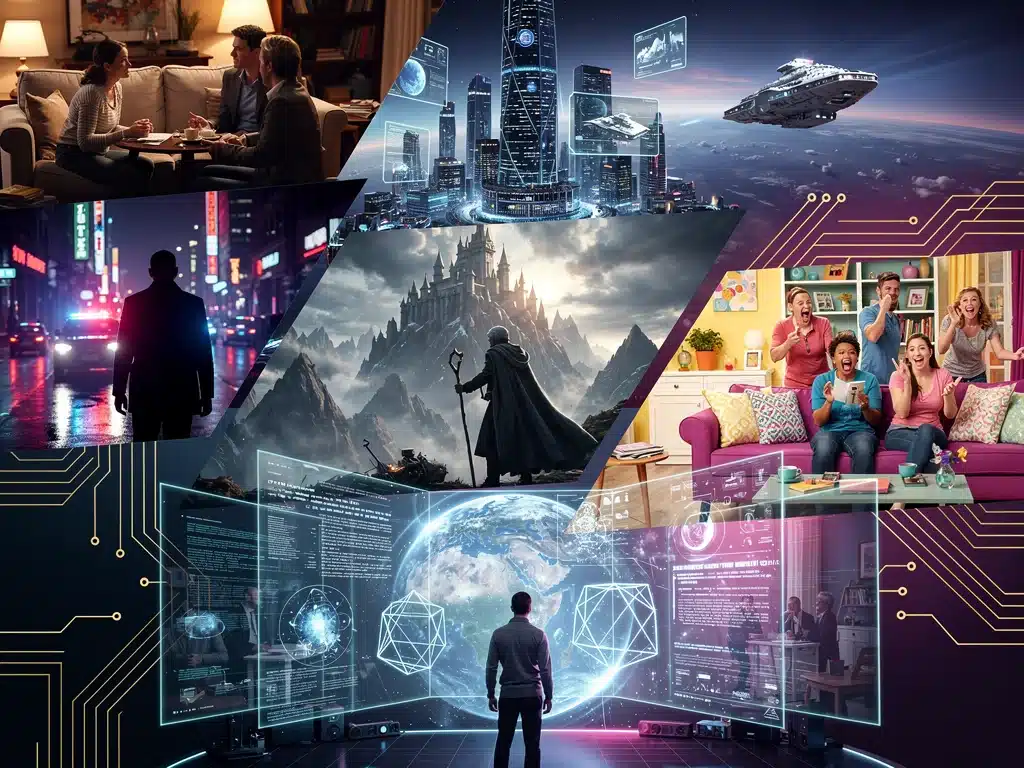
Television narratives are undergoing a major structural shift, driven by complex character arcs, non-linear timelines, and immersive world-building.
7 Popular Series Redefining Narrative in 2026 examines how these leading streaming shows are pushing structural boundaries, deepening viewer engagement, and setting new storytelling benchmarks for the medium.
The Rise of Non-Linear Narratives and Complex Timelines
One of the most significant aspects of the evolution of storytelling in 2026 is the increasing prevalence of non-linear narratives.
Series are now routinely employing intricate timelines, fractured perspectives, and recursive plot structures to keep audiences deeply invested.
This approach demands a higher level of viewer engagement, transforming passive consumption into an active deciphering of events.
This narrative complexity is not merely a stylistic choice; it serves to enrich thematic depth and character development.
By presenting events out of chronological order, creators can explore causality, memory, and subjective experience in ways that traditional linear storytelling often cannot.
The result is a more layered and intellectually stimulating viewing experience, challenging audiences to piece together the larger picture.
Popular examples demonstrate how successfully this can be executed, leading to heightened critical acclaim and dedicated fan bases.
Audiences are increasingly drawn to narratives that respect their intelligence and invite them to become active participants in the unfolding story. This trend signifies a mature viewer base eager for more than simple escapism.
Fractured Perspectives in “Echoes of Tomorrow”
“Echoes of Tomorrow” masterfully employs multiple character perspectives to unveil its central mystery, with each episode offering a different viewpoint on the same core events.
This technique creates a rich tapestry of subjective truths, compelling viewers to question established realities and biases. The series effectively uses these shifting lenses to deepen its exploration of morality and perception.
The series, set in a dystopian future, challenges viewers to constantly re-evaluate their understanding of the plot and characters.
This narrative strategy has garnered significant praise for its innovative approach, making it a standout example of the current evolution of storytelling.
It illustrates how fragmented narratives can lead to a more profound emotional and intellectual impact.
Recursive Loops in “The Chronos Paradox”
“The Chronos Paradox” takes non-linearity a step further by incorporating recursive time loops that not only drive the plot but also define the characters’ psychological states.
Protagonists are forced to relive moments, gaining new insights with each repetition, leading to profound character growth. This unique structure allows for an exhaustive examination of consequence and redemption.
The series expertly balances intricate plot mechanics with compelling emotional arcs, ensuring that the audience remains invested in the characters’ journeys despite the complex temporal shifts.
Its success highlights a growing appetite for narratives that push the boundaries of conventional structure. This approach is central to the ongoing evolution of storytelling in television.
Character-Driven Narratives and Moral Ambiguity
The evolution of storytelling in 2026 is marked by a strong emphasis on character-driven narratives, where plot often emerges directly from the internal struggles and moral dilemmas of its protagonists.
This approach moves away from simplistic hero-villain dynamics, embracing the complexities of human nature. Characters are rarely purely good or evil, reflecting the nuanced realities of the modern world.
This focus on moral ambiguity allows for more profound explorations of societal issues and personal ethics.
Viewers are invited to empathize with characters whose actions might be questionable, forcing them to confront their own biases and beliefs.
The depth of character development in these series creates a powerful emotional connection, making the narratives incredibly compelling.
The most impactful series are those that dare to present characters with flaws, contradictions, and evolving moral compasses.
This authenticity resonates deeply with audiences, who are increasingly seeking reflections of their own complex lives on screen. The shift towards such nuanced portrayals is a defining characteristic of contemporary television.
Exploring Anti-Heroes in “Crimson Veil”
“Crimson Veil” exemplifies the modern anti-hero, presenting a protagonist whose morally gray actions are driven by a deeply personal and often sympathetic backstory.
The series meticulously unpacks the psychological motivations behind their choices, challenging viewers to understand rather than merely judge.
This nuanced portrayal fosters a complex relationship between the audience and the character.
The show’s brilliance lies in its ability to generate empathy for a character who consistently operates outside conventional morality, demonstrating the powerful potential of morally ambiguous leads.
This exploration of the anti-hero archetype is a key aspect of the current evolution of storytelling, offering richer, more challenging narratives. It delves into the dark corners of human motivation.
Ensemble Dynamics in “The Collective”
“The Collective” masterfully juggles an ensemble cast, each member possessing their own intricate motivations and moral compromises.
The series thrives on the friction and unexpected alliances that arise from these diverse perspectives, creating a dynamic and unpredictable narrative. The interplay between characters is as central to the plot as any external conflict.
This approach allows for a multifaceted examination of collective responsibility and individual agency within a larger group.
The series highlights how individual choices ripple through the entire ensemble, influencing the overarching narrative. The intricate character web is a testament to the sophisticated evolution of storytelling in ensemble dramas.
Immersive World-Building and Expanded Universes
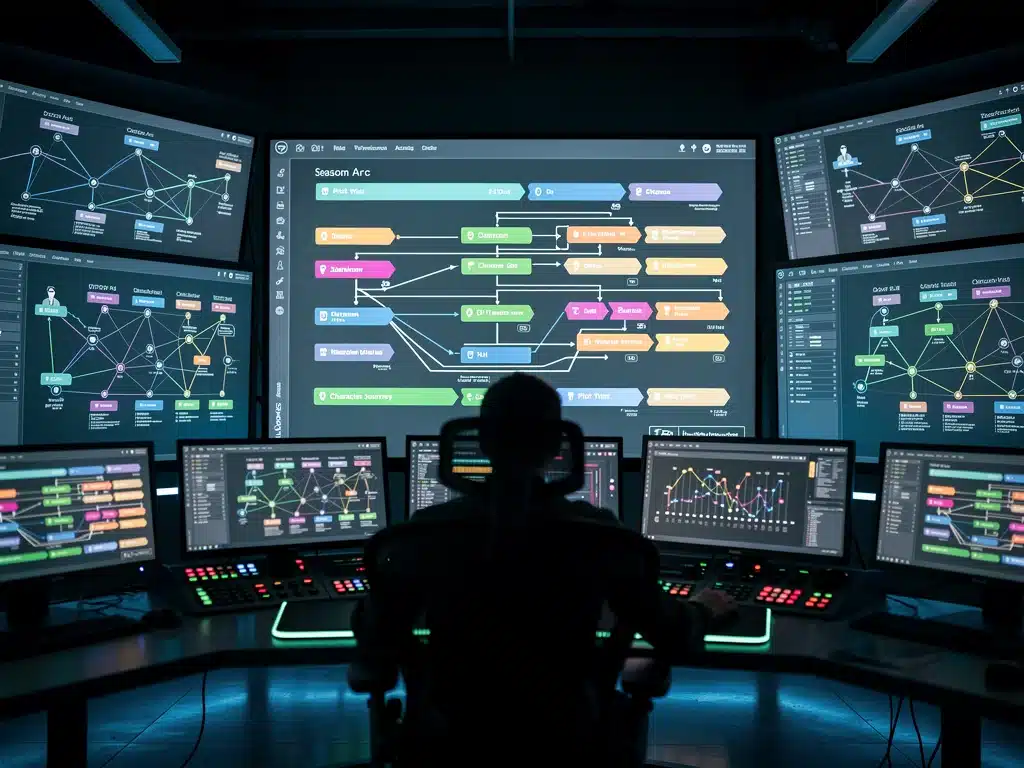
The evolution of storytelling in 2026 also manifests in the meticulous construction of immersive fictional worlds that extend beyond the confines of the screen.
These expanded universes often feature rich lore, detailed histories, and intricate social structures, drawing viewers into fully realized alternate realities. This depth of world-building significantly enhances the overall viewing experience.
Creators are leveraging advanced production techniques and extensive pre-production to craft environments that feel authentic and lived-in.
This attention to detail creates a strong sense of place, allowing narratives to unfold within a believable and consistent framework. The success of these worlds often hinges on their ability to invite viewers to explore their intricacies.
Many of these series are designed with future spin-offs, prequels, and transmedia experiences in mind, fostering a sense of continuous engagement.
This strategic expansion ensures that the narrative universe remains vibrant and relevant, long after a season concludes. It represents a long-term investment in narrative continuity and audience loyalty.
“Aethelgard Chronicles” and Its Deep Lore
“Aethelgard Chronicles” stands out for its extraordinarily deep and detailed lore, spanning centuries of fictional history, complex political systems, and diverse cultures.
The series introduces viewers to a world that feels as rich and expansive as our own, with every detail contributing to the overarching narrative. This extensive background provides a solid foundation for its intricate plotlines.
The creators have released companion books and interactive maps, further inviting fans to delve into the intricacies of Aethelgard.
This transmedia approach is a prime example of the evolution of storytelling towards comprehensive world-building. It transforms a television show into a cultural phenomenon with multiple entry points.
“Starlight Nexus” and Its Galactic Scope
“Starlight Nexus” presents a sprawling galactic empire with countless alien species, political factions, and unique planetary ecosystems, all meticulously crafted to create a believable sci-fi universe.
The sheer scale and ambition of its world-building are breathtaking, providing an endless canvas for its adventurous narratives. The series manages to make a vast universe feel intimate.
The visual effects and production design are integral to bringing this immense universe to life, immersing viewers in its grandeur and complexity.
“Starlight Nexus” demonstrates how modern technology enables the creation of truly epic and expansive narrative worlds. This scale is a hallmark of the advanced evolution of storytelling in speculative fiction.
Interactive Elements and Audience Participation
The evolution of storytelling in 2026 is increasingly incorporating interactive elements, transforming viewers from passive recipients into active participants in the narrative.
This ranges from choose-your-own-adventure style episodes to social media campaigns that influence plot developments. The goal is to deepen engagement and foster a sense of ownership over the story.
These interactive features leverage digital platforms and emerging technologies to create novel viewing experiences.
By giving audiences a voice, even a limited one, creators are building stronger communities around their shows. This direct line of communication between creators and viewers represents a significant paradigm shift in television production.
The integration of audience participation reflects a recognition that modern viewers expect more than a one-way broadcast.
They desire connection, influence, and a sense of belonging within the narrative world. This trend is pushing the boundaries of what television can be, making it a truly dynamic and responsive medium.
“The Decider’s Path” and Viewer Choices
“The Decider’s Path” pioneered viewer choice episodes, allowing audiences to vote on key plot decisions at critical junctures, directly influencing the narrative’s direction.
This innovative format creates a personalized viewing experience, with multiple possible outcomes and a strong incentive for repeat viewings. The impact of these choices is woven into subsequent episodes.
This series has demonstrated the potential for true audience agency within a serialized drama, proving that interactive storytelling can be both compelling and narratively coherent.
It is a powerful example of the cutting-edge evolution of storytelling, putting viewers in the director’s chair. The show’s success has inspired numerous imitations.
Social Engagement in “Whispers of the Web”
“Whispers of the Web” actively integrates social media engagement into its narrative, with characters interacting with fictional online platforms that mirror real-world ones.
Fan theories and discussions on actual social media sometimes even influence minor plot points or character reveals. This blurs the lines between fiction and reality, creating a highly immersive experience.
The show’s creators frequently engage with the audience online, fostering a vibrant and dedicated community that feels deeply connected to the show’s universe.
This symbiotic relationship between series and audience is a defining feature of the modern evolution of storytelling. It shows how social platforms can enhance narrative depth.
Thematic Depth and Social Commentary
The evolution of storytelling in 2026 sees television series increasingly tackling complex social issues and philosophical questions with unprecedented depth.
These shows serve as powerful platforms for social commentary, prompting viewers to reflect on contemporary challenges and ethical dilemmas. This shift elevates television beyond mere entertainment to a significant cultural force.
Creators are using genre conventions—such as science fiction, fantasy, and historical drama—as allegorical frameworks to explore themes like climate change, artificial intelligence ethics, social inequality, and identity politics.
This indirect approach can often be more impactful than direct exposition, allowing audiences to engage with difficult topics on a deeper level. The narratives encourage critical thinking and open dialogue.
The commitment to thematic depth reflects a growing maturity in television production, where artistic ambition is matched by a desire to provoke thought and inspire change.
These series are not afraid to challenge conventional wisdom or present uncomfortable truths, making them vital contributions to public discourse. This responsibility is embraced by many contemporary showrunners.
“The Gilded Cage” and Economic Inequality
“The Gilded Cage,” a period drama set in a fictionalized industrial era, uses its historical setting to draw poignant parallels with contemporary economic inequality and class struggles.
The series meticulously depicts the stark contrasts between the privileged elite and the struggling working class, highlighting systemic injustices. Its relevance to modern society is undeniable.
The show’s critical success stems from its ability to weave complex social commentary seamlessly into compelling personal dramas, making it a powerful example of the evolution of storytelling.
It demonstrates that historical narratives can offer sharp insights into present-day issues. The series sparks conversations about wealth distribution.
“Synthetic Dawn” and AI Ethics
“Synthetic Dawn,” a groundbreaking science fiction series, delves into the intricate ethical implications of advanced artificial intelligence and transhumanism.
It explores questions of consciousness, identity, and humanity’s place in a world increasingly dominated by sentient machines. The series pushes philosophical boundaries in a compelling narrative.
Through its thought-provoking narratives and morally ambiguous characters, “Synthetic Dawn” forces viewers to confront the potential future impact of technological advancements.
This series is a leading voice in the evolution of storytelling, particularly within the speculative fiction genre, for its bold exploration of AI ethics. It serves as a cautionary tale and a philosophical inquiry.
Technological Innovations in Production
Beyond narrative techniques, the evolution of storytelling in 2026 is heavily influenced by significant technological advancements in television production.
These innovations are enabling creators to realize increasingly ambitious visions, from hyper-realistic visual effects to groundbreaking sound design and immersive cinematography.
The visual and auditory experience is becoming paramount.
Virtual production studios, advanced CGI, and AI-driven editing tools are now standard, allowing for greater creative freedom and efficiency.
These technologies not only enhance the aesthetic quality of series but also open new avenues for narrative expression. Complex worlds and fantastical creatures can be brought to life with unprecedented realism.
The integration of these technologies ensures that the visual spectacle matches the narrative ambition, creating a truly cinematic experience on the small screen.
This continuous push for technological excellence is a cornerstone of modern television production, raising audience expectations. It ensures that storytelling is visually as compelling as it is narratively.
Virtual Production in “Oasis Alpha”
“Oasis Alpha” extensively utilizes virtual production techniques, creating vast and detailed alien landscapes and futuristic cityscapes entirely within LED volumes.
This allows actors to perform within the digital environments in real-time, enhancing their performances and blurring the lines between practical and virtual sets. The seamless integration is remarkable.
This innovative approach not only streamlines the production process but also results in incredibly immersive visual storytelling, setting a new standard for sci-fi series.
“Oasis Alpha” showcases how technology can directly serve the evolution of storytelling, making the impossible visually tangible. It offers a new level of environmental realism.
Generative AI in “The Dream Weaver”
“The Dream Weaver” integrates generative AI for dynamic background elements and subtle environmental changes, adapting in real-time to character emotional states or plot developments.
This creates a living, breathing world that subtly responds to the narrative, adding an unprecedented layer of immersion. The AI-driven aspects are almost imperceptible but highly effective.
The use of AI in this context represents a pioneering step in television production, demonstrating how intelligent systems can enhance the creative process and deepen the viewer’s connection to the story.
This innovative application is a fascinating facet of the evolution of storytelling. It allows for a constantly evolving narrative landscape.
Summary Table: Redefining Television Storytelling
| Key Aspect | Impact on Storytelling |
|---|---|
| Non-Linear Narratives | Increases complexity, demands active viewer participation, deepens thematic exploration. |
| Moral Ambiguity | Creates relatable, complex characters, fosters empathy for nuanced ethical dilemmas. |
| Immersive World-Building | Extends narrative beyond screen, creates rich lore, encourages transmedia engagement. |
| Interactive Elements | Transforms viewers into active participants, deepens engagement, builds community. |
Frequently Asked Questions About Modern TV Storytelling
Non-linear narratives require viewers to actively piece together plot details and character motivations, transforming passive watching into an interactive puzzle. This heightened cognitive engagement often leads to deeper emotional investment and more robust discussions among fans, fostering a stronger community around the series. It challenges traditional viewing habits effectively.
Morally ambiguous characters reflect the complexities of real-world ethics, making narratives more relatable and thought-provoking. They allow for a deeper exploration of human nature, challenging audiences to confront their own biases and understand diverse perspectives. This approach adds significant depth and realism to the storytelling.
Immersive world-building creates rich, believable environments that extend the narrative beyond the screen, inviting viewers to delve deeper into the lore. This enhances the overall experience and provides a fertile ground for spin-offs and transmedia content, fostering long-term audience loyalty and engagement. It transforms a show into a universe.
Interactive elements empower viewers to become active participants, influencing plot points or engaging with the narrative through social media. This direct agency deepens engagement, creates a sense of ownership, and strengthens fan communities. It blurs the lines between creator and audience, making storytelling a collaborative experience.
Technological innovations, such as virtual production and generative AI, enable creators to realize increasingly ambitious narrative visions with hyper-realistic visuals and dynamic environments. This enhances immersion, allowing for more complex and visually stunning storytelling that captivates audiences. It pushes the boundaries of what is visually possible in television.
Looking Ahead: The Future Trajectory of Television Narrative
The current evolution of storytelling on television indicates a clear trajectory towards even greater complexity, interactivity, and thematic depth.
The seven popular series discussed here are not isolated phenomena but rather harbingers of a broader shift in how narratives are conceived and consumed.
This ongoing transformation will continue to challenge both creators and audiences, pushing the boundaries of the medium.
As technology advances and audience expectations evolve, we can anticipate even more personalized and immersive viewing experiences. To explore how narrative structures have shifted across mediums, read more about The Evolution of Storytelling.
The lines between traditional television, gaming, and interactive media will likely blur further, offering unprecedented opportunities for narrative experimentation
. This dynamic environment promises a future where storytelling is more engaging and impactful than ever before.
Staying informed about these developments is crucial for anyone interested in the future of entertainment.
The continuous evolution of storytelling ensures that television remains a vital and relevant cultural force, capable of reflecting and shaping our world in profound ways. These trends will define the next decade of episodic content.