Netflix Cancels 3 Sci-Fi Dramas: Low Completion Metrics Cited
Netflix sci-fi dramas cancellations regularly trigger debate among viewers who wonder why ambitious series can disappear even after attracting passionate audiences and strong online discussion.
Claims that Netflix recently canceled three science-fiction dramas after exactly 28 days because of low completion rates, however, are not supported by identifiable public evidence.
Netflix does use extensive engagement data when evaluating content, but its public reporting does not reveal a simple completion-rate threshold that automatically determines whether a series survives.
What Netflix Actually Publishes About Viewing Data
Netflix has progressively increased the amount of viewing information it releases through its weekly Top 10 rankings and broader What We Watched engagement reports.
The company’s public measurement system emphasizes views, calculated by dividing total hours watched by a title’s runtime, alongside total viewing hours in its broader reporting.
These metrics help audiences compare titles of different lengths, but they should not be confused with an officially published cancellation formula.
Netflix Does Not Publish a Cancellation Threshold
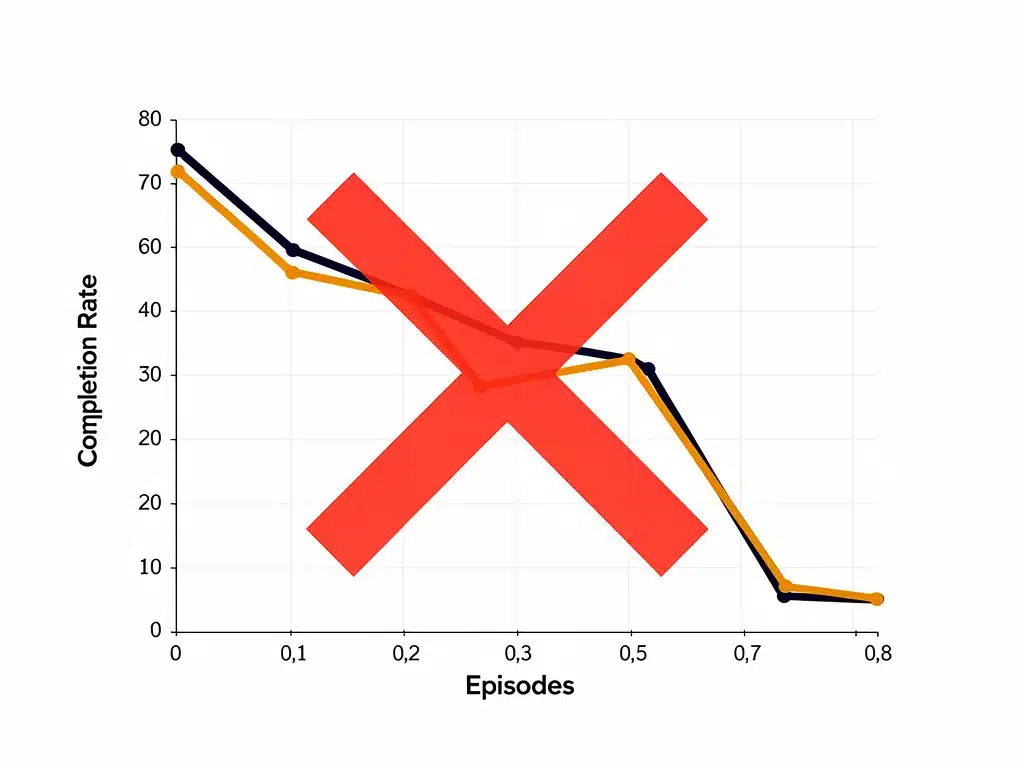
There is no public Netflix rule stating that a series below a particular completion percentage will automatically be canceled after one month.
Renewal decisions can involve viewing, audience size, production cost, growth potential, scheduling, rights, creative considerations and other internal factors.
Outside analysts may estimate which metrics influence decisions, but those estimates should not be presented as confirmed internal Netflix policy.
The Famous 28-Day Window Is Often Misunderstood
Netflix previously used approximately 28 days as an important measurement period when compiling its Most Popular rankings for films and television series.
That historical measurement window is sometimes incorrectly transformed into a claim that Netflix gives every series only 28 days to prove itself.
The existence of a ranking window does not establish that cancellation decisions are made automatically when the same number of days has passed.
Netflix Expanded the Window to 91 Days
In 2023, Netflix changed its Most Popular methodology and expanded the qualifying window from roughly 28 days to 91 days.
The company explained that many films and shows continue building audiences over time, making a longer measurement period more representative of their performance.
Any 2026 article describing 28 days as Netflix’s universal current performance window therefore needs substantial qualification.
Engagement Still Matters Enormously to Netflix
Although there is no verified 28-day cancellation rule, Netflix openly describes engagement as one of the most important indicators of member satisfaction.
The company has said that when members watch more, they are more likely to remain subscribers, recommend Netflix sci-fi dramas and perceive greater value in the service.
That makes sustained viewing commercially meaningful even without a public formula connecting one engagement metric directly to renewals.
Views Are the Main Public Metric
Netflix defines a view by dividing the total number of hours watched by the runtime of the film or season being measured.
This method allows a short series and a much longer season to be evaluated more comparably than they would be through hours watched alone.
Netflix also says views correlate strongly with completers, but correlation does not mean the company publicly reports completion percentages for every series.
Why Completion Can Still Be Useful Internally
Even though Netflix does not publish complete completion-rate datasets, understanding whether viewers finish a season can logically provide useful information about audience engagement.
A series that attracts many initial viewers but loses most of them before the final episodes presents a different audience pattern from one watched consistently throughout.
Internal analytics can evaluate these patterns at a level of detail that the public Top 10 rankings do not reveal.
Completion Does Not Automatically Equal Quality
A lower completion rate does not necessarily mean that a series is poorly made because viewing behavior can be influenced by many external factors.
Season length, episode duration, release timing, competition, marketing exposure and the complexity of the narrative can all affect how quickly audiences finish.
For that reason, completion should be understood as one possible engagement signal rather than an objective measurement of creative quality.
Sci-Fi Dramas Can Be Particularly Expensive to Produce
Science-fiction series frequently require visual effects, constructed environments, specialized costumes and extensive post-production that can raise production costs substantially.
A costly series generally needs a commercial performance capable of justifying continued investment, especially when future seasons may become even more expensive.
This cost-performance relationship helps explain why Netflix sci-fi dramas cancellations often generate discussion about economics as much as audience popularity.
Audience Size Must Be Evaluated Against Cost
Ten million viewers do not necessarily represent the same business outcome for a modest drama and a visual-effects-heavy global science-fiction production.
The more expensive show may need substantially greater engagement to generate a comparable return on the platform’s investment.
That is why raw audience numbers without budget context rarely provide enough information to predict renewal outcomes reliably.
Netflix Evaluates More Than Initial Popularity
A strong premiere can demonstrate curiosity and effective marketing, but long-term value depends on whether audiences continue engaging after the initial launch period.
Netflix can observe viewing behavior across countries, account types and different stages of a title’s life on the service.
This detailed information provides significantly more context than public social-media trends or a single position in the weekly Top 10.
A Viral Launch Does Not Guarantee Renewal
A new show can dominate online conversation during its first weekend and still struggle to maintain comparable viewing during subsequent weeks.
Conversely, a title can begin more slowly and continue accumulating substantial engagement as recommendations and word of mouth spread.
The longer 91-day Most Popular window acknowledges that successful streaming titles do not all follow identical release trajectories.
Netflix’s Engagement Reports Offer Important Context
Netflix’s What We Watched reports cover the overwhelming majority of viewing activity and offer a broader picture than weekly rankings alone.
The reports list titles according to viewing activity across extended periods, making it possible to see the long tail of engagement beyond launch week.
They remain useful for understanding popularity, although they still do not reveal the complete internal economics behind renewal decisions.
Public Data Has Clear Limits
The reports do not provide production budgets, profit generated by an individual series or a standardized renewal score for each title.
They also do not reveal every behavioral metric Netflix can observe internally when subscribers start, pause, abandon or return to programming.
Any analysis of cancellations should therefore distinguish between publicly available engagement data and conclusions inferred from incomplete information.
There Is No Evidence for Three Specific 2026 Cancellations
The original claim describes three unnamed science-fiction dramas supposedly canceled after 28 days because viewers failed to finish them.
Without the titles, cancellation announcements or an attributable Netflix statement, that assertion cannot be independently verified as a 2026 event.
A credible article should not build an entire analysis around an unnamed set of shows whose cancellation circumstances cannot be confirmed.
Specific Claims Require Specific Evidence
If a cancellation is attributed directly to low completion, the evidence should identify who disclosed that information and where the statement appeared.
Industry reporting can sometimes reveal performance concerns through executives, producers or trade publications even when Netflix itself remains silent.
Without such sourcing, describing completion as the confirmed reason for a cancellation turns a plausible theory into an unsupported fact.
Past Netflix Sci-Fi Dramas Cancellations Show the Complexity
Netflix has canceled numerous science-fiction and fantasy series over the years, often provoking strong reactions from viewers who wanted their stories continued.
Examples frequently discussed by fans include The OA, Sense8 and The Dark Crystal: Age of Resistance, all of which developed recognizable audiences.
However, public discussion around those titles should not be rewritten as proof that one identical metric caused every decision.
Different Shows Can Have Different Business Cases
A series can face cancellation because its audience is too small relative to cost, because growth has slowed or because future production becomes difficult.
Contracts, cast availability, creative planning and strategic changes can also complicate decisions about continuing a television production.
Reducing every cancellation to “low completion rate” removes much of the complexity involved in commissioning expensive global entertainment.
Fan Frustration Is Still a Real Problem
Viewers often invest many hours in serialized science fiction because the genre tends to build long-running mysteries, worlds and character arcs.
When a story ends without resolution, audiences can feel that their investment has been wasted even when the cancellation makes commercial sense for the platform.
Repeated experiences like this can create hesitation around starting another unfinished streaming series with no guaranteed conclusion.
Unfinished Stories Can Affect Viewer Trust
Some viewers respond to cancellations by waiting until a show receives additional seasons before deciding to begin watching it.
That behavior creates an unusual tension because platforms want early engagement while cautious viewers want evidence that the story will continue.
The cycle demonstrates why Netflix sci-fi dramas cancellations are not only production decisions but also issues affecting audience expectations.
Fans Cannot Reliably “Save” a Show by Bingeing It
The idea that viewers must complete a series immediately to prevent cancellation oversimplifies how streaming renewal decisions are likely made.
Watching a show naturally contributes engagement, but individual viewers cannot know the exact internal performance targets attached to a production.
There is therefore no verified rule requiring fans to finish every episode inside a particular number of days to keep a series alive.
Audience Support Can Still Be Valuable
Strong viewing, recommendations and sustained interest can demonstrate that a show has an active audience capable of generating continued demand.
Fan campaigns may also draw publicity to canceled titles, although public pressure does not guarantee that a platform will reverse a business decision.
The most reliable action for viewers is simply to watch programming they genuinely value rather than attempting to manipulate an unknown internal metric.
Completion Data Can Be Misrepresented Online
Third-party reports sometimes publish estimated completion percentages based on panels, external measurement firms or limited geographic samples.
Those datasets can provide useful clues, but they should not automatically be described as Netflix’s own global internal numbers.
Methodology matters because the behavior of one measurement panel may differ from Netflix’s complete worldwide subscriber base.
Look for the Source Behind Every Percentage
A completion-rate claim should identify the company that measured it, the territory covered, the measurement period and the audience included.
A number without methodology can appear authoritative while providing little evidence about the show’s actual performance across Netflix.
This is especially important when a percentage is being used to explain why a multimillion-dollar television production was canceled.
Production Cost Remains a Major Consideration
Streaming companies need to determine whether each additional season provides enough value relative to the money required to produce and market it.
Science fiction can amplify that pressure because sophisticated visual effects, environments and action sequences frequently increase the cost per episode.
A series with moderate engagement may therefore face a more difficult renewal decision than a cheaper production attracting a similar audience.
Later Seasons Can Become More Expensive
Successful television productions can face rising compensation, larger creative ambitions and additional production requirements as they continue.
Renewing a series is therefore not always a decision to repeat the same financial investment made during its first season.
Platforms can compare those higher future costs with projected audience growth before determining whether another season makes commercial sense.
Netflix Continues Investing in Science Fiction
Cancellations do not mean Netflix has abandoned science-fiction programming or adopted a blanket policy against ambitious genre productions.
The company continues releasing and developing science-fiction films and series while supporting major existing properties with additional seasons.
For example, 3 Body Problem moved into production on its second season after Netflix renewed the series to continue its larger story.
One Cancellation Does Not Define the Genre Strategy
A platform can discontinue individual underperforming projects while continuing to invest heavily in the same genre through other productions.
Netflix’s catalog strategy relies on serving many audience tastes rather than guaranteeing continued seasons for every series within one category.
The broader streaming investment landscape therefore matters when evaluating individual cancellation headlines.
3 Body Problem Demonstrates a Different Outcome
Netflix sci-fi dramas officially renewed 3 Body Problem and later confirmed that production had begun on the show’s second season.
The company’s decision demonstrates that expensive and complex science-fiction projects can continue when Netflix determines that further investment is justified.
It also illustrates why a claim that the platform is broadly turning away from slow or ambitious science fiction would be too simplistic.
Renewals Also Reflect Long-Term Strategy
Some productions are developed around stories that require multiple seasons, making future planning part of the original creative and commercial evaluation.
A successful first season can provide enough audience evidence for Netflix to commit additional resources to finishing a planned narrative.
That differs substantially from assuming every title must satisfy one publicly known completion threshold during its first month.
Netflix Changed How It Defines Popularity
The transition from a shorter Most Popular measurement window to 91 days reflects Netflix’s acknowledgement that content consumption can develop over time.
The company also shifted toward views as a more intuitive public metric while continuing to provide total hours watched.
These changes matter when interpreting Netflix strategy changes because old measurement descriptions can quickly become outdated.
Streaming Metrics Continue to Evolve
Platforms regularly adjust their reporting methods as they learn how audiences discover and consume increasingly large catalogs.
No single number perfectly captures whether a title attracts subscribers, retains existing users and provides enough value to justify its cost.
Netflix itself has acknowledged that there is no perfect streaming metric, which makes one-factor explanations especially questionable.
Subscriber Retention Is Part of the Larger Equation
Netflix has repeatedly connected engagement with retention because members who find programming they value have more reasons to continue using the service.
Popular shows can also influence acquisition through recommendations, cultural conversation and the perception that the service offers desirable programming.
These effects give content value beyond the number of people who happen to watch during one particular week.
Engagement Supports the Subscription Business
Unlike traditional television supported primarily through scheduled advertising, subscription streaming depends heavily on keeping members satisfied over time.
Netflix therefore has an incentive to fund content that contributes meaningfully to engagement relative to the resources spent creating it.
This business context helps explain why subscriber growth and engagement remain relevant when discussing programming strategy.
Creators Face a Difficult Balancing Act
Serialized science fiction often benefits from deliberate world-building, unanswered questions and character development that unfolds across many episodes.
At the same time, streaming audiences have enormous catalogs available and can stop watching immediately when a story fails to maintain interest.
Creators therefore need to balance narrative patience with enough momentum to keep audiences invested without reducing every project to the same formula.
Data Should Not Dictate Every Creative Choice
Performance information can help studios understand where audiences stop watching, but storytelling built entirely around optimization risks becoming predictable.
Distinctive science fiction often succeeds precisely because it introduces unusual ideas that require patience before their full significance becomes clear.
The long-term challenge is using audience insight without eliminating the creative experimentation that gives genre television its identity.
What Viewers Should Understand About Cancellations
A cancellation announcement rarely provides the complete set of financial and audience information executives considered when reaching their decision.
Fans may see strong social-media discussion while Netflix sees viewing behavior across millions of accounts and dozens of international markets.
Neither perspective alone proves whether a series was commercially sustainable enough to justify another season.
A Top 10 Appearance Is Not a Renewal Guarantee
Entering Netflix’s weekly Top 10 shows that a title generated significant viewing during a particular measurement period.
It does not reveal whether performance met the internal expectations associated with that production’s budget and intended audience.
A series can therefore appear successful publicly while still facing a difficult renewal calculation behind the scenes.
What We Can Confirm About Netflix’s Strategy
Netflix publicly measures engagement extensively and considers viewing activity important to retention, acquisition and the perceived value of the service.
Its public rankings currently emphasize views and extended measurement periods rather than an official 28-day completion threshold.
Production economics and long-term audience engagement remain logical components of renewal decisions, even though Netflix does not disclose a universal formula.
What Cannot Be Confirmed
There is no reliable evidence establishing that three unnamed sci-fi dramas were canceled in 2026 after exactly 28 days because of low completion metrics.
There is also no public Netflix percentage showing the completion rate a series must achieve to qualify automatically for another season.
Claims presenting either point as confirmed company policy should therefore be treated cautiously unless supported by attributable reporting or Netflix itself.
Netflix Sci-Fi Dramas Cancellations at a Glance
Netflix sci-fi dramas cancellations are influenced by a complex streaming environment where engagement, cost and long-term value all matter.
Public Netflix data can reveal substantial information about viewing, but it does not expose every metric executives use when deciding whether to renew programming.
The table below separates verifiable Netflix measurement practices from claims that are not supported by publicly available evidence.
Separate Public Data From Industry Assumptions
Streaming analysis becomes more reliable when official measurements, third-party estimates and speculation are clearly identified as different categories of evidence.
A plausible explanation can still be wrong when repeated as fact without access to internal performance and financial information.
That distinction is particularly important when explaining high-profile cancellations that involve large budgets and passionate fan communities.
| Key Point | What the Evidence Shows |
|---|---|
| Three Sci-Fi Dramas Cancellations | No reliable evidence identified for three unnamed 2026 series canceled after exactly 28 days. |
| 28-Day Rule | Netflix expanded its Most Popular measurement window from roughly 28 days to 91 days in 2023. |
| Public Engagement Metric | Netflix prominently reports views, calculated as total hours viewed divided by runtime. |
| Completion Threshold | Netflix has not published a universal completion percentage required for renewal. |
| Renewal Economics | Engagement matters, but cost and other strategic considerations can also affect renewal decisions. |
Frequently Asked Questions About Netflix Cancellations
Did Netflix cancel three sci-fi dramas shows after exactly 28 days in 2026?
No reliable public evidence was identified confirming that specific event or naming three series canceled under that exact condition.
Does Netflix use completion rates?
Netflix can analyze detailed viewing behavior internally, but it does not publish a universal completion-rate threshold that automatically determines renewal.
What metric does Netflix publicly report?
Netflix prominently reports views, calculated by dividing total hours watched by the runtime of a film or television season.
Does Netflix still use a 28-day popularity window?
No. Netflix expanded its Most Popular measurement period from approximately 28 days to 91 days in 2023.
Why does engagement matter to Netflix?
Netflix says stronger engagement is associated with retention, acquisition and members placing greater value on the service.
Why are sci-fi dramas series vulnerable to cancellation?
Many science-fiction productions are expensive, so moderate audiences may be harder to justify when visual effects and production requirements create high costs.
Does appearing in the Netflix Top 10 guarantee renewal?
No. A Top 10 appearance demonstrates viewing activity but does not reveal whether a show met Netflix’s internal expectations or financial targets.
Can fans save a show by finishing it quickly?
Viewing contributes to engagement, but there is no verified rule stating that completing a series within a particular number of days guarantees renewal.
Has Netflix stopped investing in science fiction?
No. Netflix continues developing and renewing science-fiction projects, including additional seasons of major titles such as 3 Body Problem.
Why doesn’t Netflix explain every cancellation?
Companies generally do not disclose every internal financial, contractual, audience and strategic factor involved in individual programming decisions.
Conclusion
Netflix sci-fi dramas cancellations deserve careful analysis, but the available evidence does not support a story about three dramas automatically canceled after a 28-day completion test.
Netflix clearly values engagement and publicly reports extensive viewing data, while its current popularity methodology uses views and a longer 91-day measurement window.
The most accurate conclusion is that renewals involve multiple performance and business considerations, not one publicly known completion metric operating on a fixed 28-day deadline.