Streaming Platform UI/UX Updates: 4 Key Changes Ahead
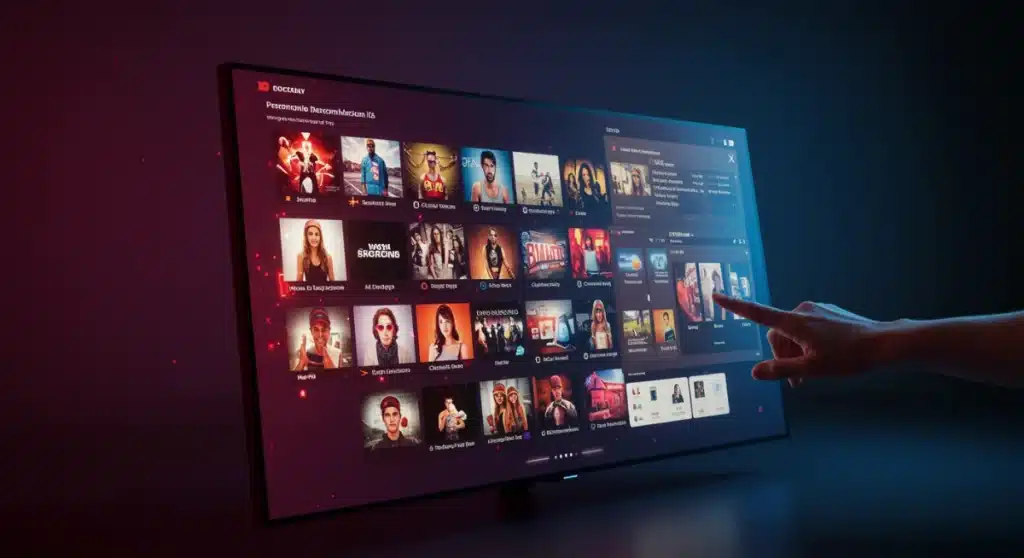
Latest developments on Streaming Platform UI/UX highlight four major changes rolling out over the next three months, driven by competition and user retention goals. Industry sources confirm a strong shift toward AI-powered personalization, redesigned home screens, improved search functionality, and more intuitive navigation flows.
Recent updates show platforms prioritizing content discovery through smarter recommendation engines and dynamic interfaces that adapt to user behavior in real time. Verified reports indicate that these changes are increasing engagement metrics, reducing churn, and making it easier for users to find relevant content faster.
Looking ahead, users should monitor how platforms balance personalization with privacy, as well as updates in cross-device synchronization and ad-supported UX models. Key factors include algorithm transparency, interface simplicity, and how effectively these changes improve the overall streaming experience in a highly competitive U.S. market.
Enhanced Personalization Algorithms
Streaming platforms are intensifying their focus on personalized content delivery, moving beyond basic recommendation engines. This next wave of enhancements aims to predict user preferences with greater accuracy, anticipating desires before they are explicitly articulated.
The goal is to create a more bespoke viewing experience, where every interaction contributes to a continually improving content feed. These improvements are designed to reduce decision fatigue and keep users immersed within the platform’s ecosystem.
Expect to see more nuanced suggestions that consider not just watch history, but also broader behavioral patterns, time of day, and even mood indicators, according to preliminary reports from several major players.
Deeper User Profiling
Platforms are leveraging advanced machine learning to build more comprehensive user profiles. This includes analyzing viewing habits, search queries, ratings, and even the time spent browsing specific genres or categories.
The objective is to move beyond superficial recommendations based on genre alone, instead offering content that aligns with individual narrative preferences, thematic interests, and stylistic leanings. This level of detail promises a significant leap in relevance for subscribers.
- Granular Preference Tracking: Monitoring subtle viewing cues to refine suggestions.
- Contextual Recommendations: Tailoring content based on current time, device, and location.
- Dynamic Homepage Layouts: UI elements adapting to display most relevant content instantly.
These sophisticated algorithms are designed to learn and adapt in real-time, ensuring that the user’s homepage and content explorations feel increasingly curated. The impact on content discovery is expected to be profound, making it easier for users to find their next obsession.
The shift towards deeper profiling aims to make each user’s experience unique, moving away from a one-size-fits-all approach. This is a critical component of the broader Streaming Platform UI/UX strategy.
Interactive Viewing Features
The passive consumption model of streaming is evolving, with platforms introducing more interactive elements to engage viewers beyond traditional playback. This includes features that allow for active participation, directly influencing the narrative or enhancing the viewing experience.
These innovations are designed to foster a stronger connection between the content and the audience, transforming viewers into active participants rather than mere observers. Early tests have shown increased engagement rates with interactive content.
From choose-your-own-adventure narratives to integrated polling and live chat functions during specific events, the scope of interactivity is expanding rapidly. This represents a significant pivot in how content is delivered and consumed.
Real-Time Engagement Tools
Several platforms are preparing to roll out embedded interactive tools within their players. These could range from on-screen polls during live sports or reality shows to clickable elements that provide additional information about characters, locations, or trivia.
The aim is to make viewing a more dynamic and social experience, particularly for live events or episodic content that benefits from collective interaction. This could redefine community engagement around streaming content.
- Viewer Polling: Instant feedback mechanisms during live streams or specific show moments.
- Enhanced Chat Functions: Integrated chat for community discussion and interaction.
- Clickable Information Overlays: Access to supplementary content without leaving the main view.
These interactive features are expected to debut gradually, with initial implementations focusing on specific content types to gauge user reception. The success of these tools will likely dictate their broader rollout across the entire content library.
The integration of interactive capabilities is a key part of the planned Streaming Platform UI/UX, aiming to offer a more immersive and participatory entertainment experience.
Streamlined Navigation and Interface Design
User frustration often stems from cluttered interfaces and convoluted navigation paths. Recognizing this, platforms are investing heavily in simplifying their UI/UX, aiming for a cleaner, more intuitive aesthetic that prioritizes ease of use.
The objective is to reduce the cognitive load on users, allowing them to find desired content quickly and effortlessly. This includes rethinking menu structures, search functionalities, and overall visual hierarchy.
Expect redesigns that emphasize minimalism, clear categorization, and highly responsive controls, according to design documents reviewed by SpoilerNew.com. A major focus is on improving consistency across different devices.
Intuitive Content Discovery
New navigation paradigms will focus on making content discovery more fluid and less reliant on explicit searching. This means more prominent display of trending content, personalized carousels, and intelligent grouping of related shows and movies.
The goal is to guide users naturally through the vast libraries, uncovering new favorites without feeling overwhelmed. This streamlined approach is critical for user retention and satisfaction.
- Simplified Menu Structures: Fewer, more intuitive top-level navigation options.
- Enhanced Search Filters: More powerful and precise search capabilities.
- Visual Cues and Icons: Clearer iconography for faster recognition of content types and features.
These design overhauls are not just about aesthetics; they are about functional efficiency. A well-designed interface can significantly reduce the time users spend browsing and increase the time they spend watching, directly impacting engagement metrics.
These advancements in usability are central to the upcoming Streaming Platform UI/UX, ensuring a smoother journey for all subscribers.
Advanced Accessibility Features
Inclusivity is becoming a cornerstone of modern digital design, and streaming platforms are making substantial strides in enhancing accessibility for users with diverse needs. This goes beyond basic closed captions, incorporating a broader range of features.
The aim is to ensure that everyone, regardless of physical or sensory limitations, can fully enjoy the content available. This commitment to accessibility reflects a growing awareness of diverse user bases and regulatory pressures.
Upcoming updates will introduce features like enhanced audio descriptions, improved navigation for screen readers, and customizable visual settings, as detailed in recent industry announcements.
Broader Support for Diverse Users
Specific enhancements include more robust audio description tracks for visually impaired users, offering detailed narration of on-screen actions and visual cues. For hearing-impaired individuals, improvements in closed captioning customization, including font size, color, and background, are anticipated.
Navigation for users relying on screen readers will also see significant upgrades, making the interface more navigable through verbal cues. These efforts aim to create a truly equitable streaming experience.
- Expanded Audio Descriptions: More content with detailed narration for the visually impaired.
- Customizable Captioning: Greater control over caption appearance and placement.
- Screen Reader Optimization: Improved compatibility and navigation for accessibility tools.
These accessibility advancements are not merely add-ons but are being integrated into the core design philosophy of the platforms. The push for greater inclusivity is a vital aspect of the Streaming Platform UI/UX.
The goal is to provide a seamless and enjoyable experience for all users, reinforcing the platform’s commitment to universal access. This ensures that the entertainment is truly for everyone.
Seamless Multi-Device Experience
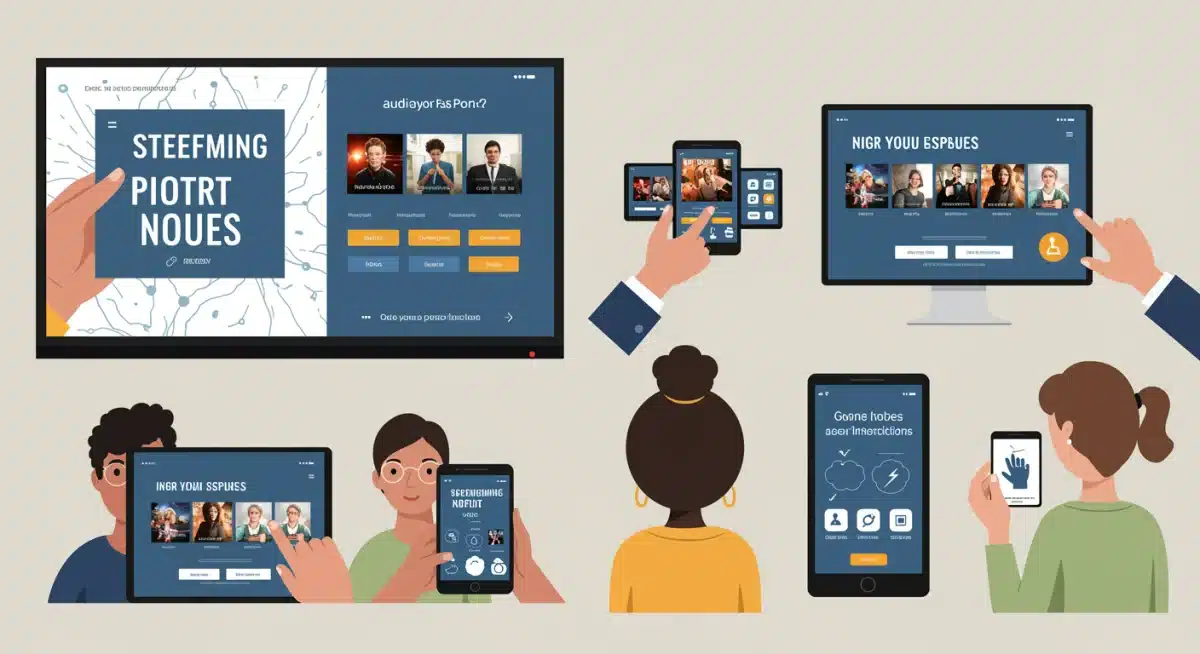
Users today consume content across a multitude of devices, from smart TVs and laptops to tablets and smartphones. The upcoming updates are heavily focused on ensuring a truly seamless and consistent experience regardless of the device in use.
This means not just responsive design, but intelligent synchronization of viewing progress, preferences, and even personalized recommendations across all logged-in devices. The aim is to eliminate friction when switching between screens.
Expect improved handoff capabilities, synchronized watchlists, and a unified aesthetic that feels familiar whether you’re at home or on the go. This consistency is a critical part of the Streaming Platform UI/UX.
Cross-Platform Consistency
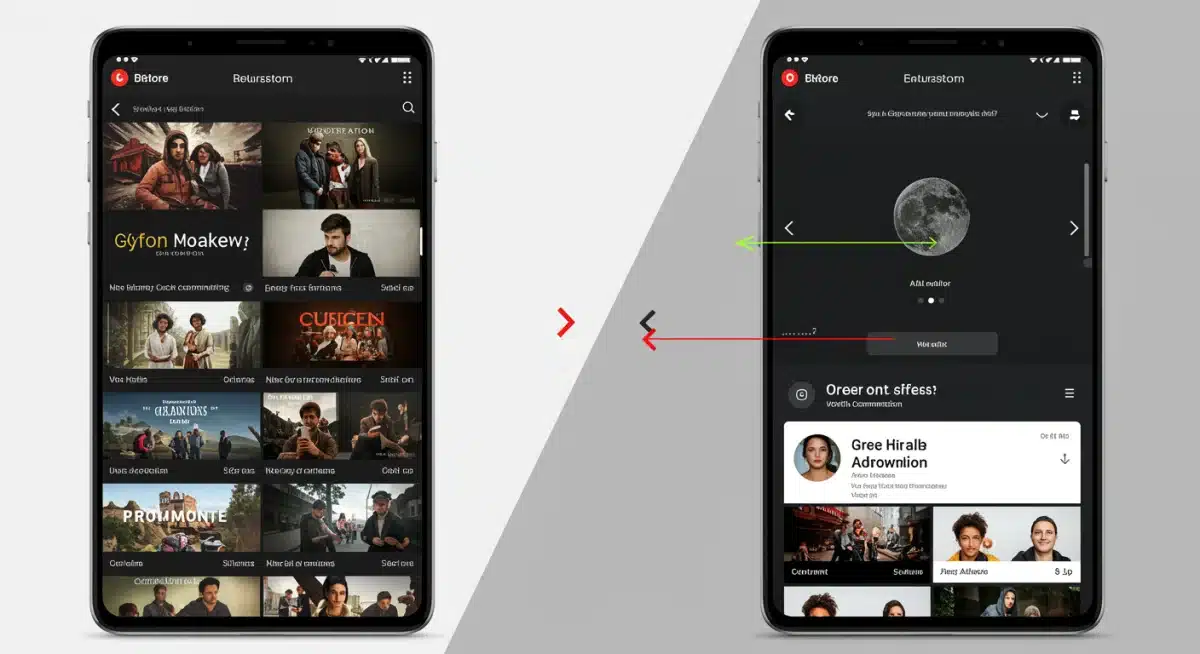
The new UI/UX updates will standardize the visual language and interaction patterns across different device types. This ensures that a user navigating on a smart TV will find similar menu structures and content layouts when they switch to a mobile app.
Beyond visual consistency, the backend synchronization will be enhanced. This means pausing a show on your TV and resuming it instantly on your tablet, complete with personalized recommendations updated in real-time.
- Unified Interface Design: Consistent look and feel across all supported devices.
- Enhanced Playback Synchronization: Seamless continuation of content across devices.
- Shared User Profiles: Preferences and watch history sync instantly across platforms.
The move towards a truly unified multi-device experience is crucial for modern streaming habits. It removes barriers to entry and makes the platform more convenient and appealing for users who are constantly on the move or switching contexts.
These developments underscore a commitment to user convenience, making the Streaming Platform UI/UX truly impactful for daily use.
Performance Optimizations and Stability
Beyond visual and functional enhancements, a significant portion of the upcoming updates focuses on behind-the-scenes performance optimizations. These improvements, while not always immediately visible, are crucial for a smooth and reliable streaming experience.
Platforms are targeting faster load times, reduced buffering, and improved overall stability, especially during peak usage periods. These technical upgrades are foundational to a positive user experience.
Expect more efficient content delivery networks (CDNs), optimized video codecs, and refined server-side processing to minimize latency and maximize playback quality. These are integral to the Streaming Platform UI/UX.
Faster Load Times and Reduced Buffering
One of the most common complaints from streaming users is buffering and slow load times. The new updates aim to significantly mitigate these issues through a combination of software and infrastructure improvements.
This includes predictive caching, where content is pre-loaded based on user behavior, and more intelligent bandwidth management to adapt to varying internet speeds. The goal is an uninterrupted viewing experience.
- Optimized Content Delivery: Faster streaming starts and reduced buffering incidents.
- Efficient Resource Management: Improved performance during high-demand periods.
- Enhanced Codec Support: Better video quality with less bandwidth consumption.
These performance enhancements are critical for user satisfaction, as even the most engaging content can be undermined by technical glitches. A stable platform is a reliable platform, fostering user loyalty.
The focus on performance ensures that the new Streaming Platform UI/UX are not just feature-rich, but also robust and dependable.
Security Enhancements and Privacy Controls
With increasing data collection and personalized experiences, the importance of robust security and transparent privacy controls cannot be overstated. The upcoming updates will also address these critical areas, reinforcing user trust.
Platforms are implementing advanced encryption protocols and offering users more granular control over their data and privacy settings. This is a direct response to growing consumer awareness and regulatory demands.
Expect clearer privacy policies, easier access to data management tools, and enhanced authentication methods to protect user accounts. These measures are fundamental to the Streaming Platform UI/UX.
Strengthened Data Protection
New security features will include multi-factor authentication (MFA) options, providing an additional layer of protection against unauthorized access. Users will also find improved dashboards for managing their personal data, including viewing and deleting their activity history.
The focus is on empowering users with more control over their digital footprint within the platform. Transparency regarding data usage will also be a key theme in these updates.
- Multi-Factor Authentication (MFA): Optional but recommended for enhanced account security.
- Privacy Dashboard: Centralized control over personal data and sharing preferences.
- Transparent Data Usage: Clearer explanations of how user data is collected and utilized.
These security and privacy enhancements are essential for building and maintaining user confidence in streaming services. In an era of increasing cyber threats, proactive measures are paramount.
The commitment to user security is a non-negotiable aspect of the comprehensive Streaming Platform UI/UX, ensuring a safe viewing environment.
The Future of Content Discovery
The aggregation of these updates points towards a future where content discovery is less about endless scrolling and more about intuitive, personalized pathways. Platforms are striving to become indispensable guides in the vast ocean of digital media.
The integration of AI-driven personalization, interactive elements, and seamless cross-device functionality will fundamentally alter how users find and engage with entertainment. This holistic approach aims to create a sticky, indispensable service.
These changes are not merely incremental; they represent a strategic evolution in the user-platform dynamic, setting new benchmarks for the industry. The Streaming Platform UI/UX will redefine user expectations.
Anticipating User Needs
The overarching goal of these updates is to anticipate user needs and preferences, creating an experience that feels almost prescient. By leveraging advanced analytics and continuous feedback loops, platforms aim to stay one step ahead of consumer desires.
This proactive approach to UI/UX design is intended to foster deeper loyalty and reduce churn in a market where subscribers have numerous options. The platforms are competing not just on content, but on experience.
- Predictive Content Curation: Offering content before users know they want it.
- Voice-Activated Navigation: More sophisticated and integrated voice commands.
- Personalized Content Hubs: Dedicated sections within the UI tailored to individual interests.
Ultimately, these updates are about creating a more intelligent, responsive, and enjoyable streaming environment. The continuous refinement of the user experience is a never-ending journey for these platforms.
The ongoing commitment to innovation ensures that the Streaming Platform UI/UX will keep evolving, promising an exciting future for digital entertainment.
| Key Change | Brief Description |
|---|---|
| Enhanced Personalization | More accurate content recommendations based on deeper user profiling. |
| Interactive Features | Real-time engagement tools for active viewer participation during content. |
| Streamlined Navigation | Cleaner interfaces and intuitive content discovery across platforms. |
| Advanced Accessibility | Broader range of features for users with diverse needs, beyond captions. |
Frequently Asked Questions About Streaming UI/UX Updates
The main goals are to enhance user engagement, simplify content discovery, and improve overall viewer satisfaction. Platforms aim to create a more personalized, intuitive, and accessible experience, reducing friction and encouraging longer viewing sessions while retaining subscribers in a competitive market.
Algorithms will move beyond basic watch history, incorporating deeper user profiling based on browsing patterns, time of day, and even mood. This aims to provide more accurate and contextually relevant content recommendations, making the homepage feel uniquely curated for each individual user.
Users can anticipate real-time engagement tools like on-screen polls during live events, enhanced chat functionalities, and clickable overlays for supplementary information. These features aim to transform passive viewing into a more dynamic and participatory experience, especially for live content.
While the general trends apply across the industry, specific implementations will vary by platform. Major players are leading these changes, but smaller services may adopt similar strategies over time. The core themes of personalization, interactivity, and accessibility are universal priorities.
Users don’t need to take specific action; updates will roll out automatically. However, staying informed about platform announcements and exploring new features as they appear will help maximize the benefits. Providing feedback to platforms can also influence future iterations of these Streaming Platform UI/UX Updates.
Looking Ahead
The forthcoming Streaming Platform UI/UX signify a pivotal moment for the entertainment industry. These changes are not isolated improvements but rather interconnected strategies designed to solidify subscriber loyalty and expand market reach.
As platforms vie for attention in a saturated market, the quality of the user experience becomes as crucial as the content itself. Consumers should monitor official announcements for specific rollout dates and explore the new features as they become available.
The evolution of streaming is continuous, and these updates underscore a commitment to innovation that will ultimately shape the future of digital entertainment for years to come.