Why Streaming Services Are Investing Billions: 2026 Series Budgets
The landscape of digital entertainment is undergoing a significant transformation driven by massive Streaming Services. This article explores the strategic imperatives behind these multi-billion dollar commitments. We delve into the upcoming production budgets for five major series slated for 2026, revealing the scale of this content arms race.
Streaming Services are reshaping the global entertainment industry, with platforms pouring unprecedented sums into original content. This intense competition for subscriber attention compels companies to greenlight ambitious projects. Understanding these financial commitments offers a glimpse into the future of television and film production.
The strategic decisions made today will define the next generation of streaming giants and their content offerings. This analysis provides a detailed look at why these investments are escalating and what they mean for viewers. We will examine the financial commitments for several high-profile series expected in 2026, offering crucial context for these massive expenditures.
The Escalating Stakes: Why Streaming Services Are Investing Billions
Streaming services are locked in an intense battle for subscriber acquisition and retention, making original content their most potent weapon. The sheer volume of new platforms and offerings means a constant need for fresh, high-quality, and exclusive shows to stand out. This competitive pressure directly fuels the massive Streaming Services we are witnessing.
These billions are not just for creating content; they are an investment in brand identity and global market share. A hit series can attract millions of new subscribers and keep existing ones engaged, justifying astronomical production costs. The return on investment for a globally popular show can be immense, far outweighing initial expenditures.
Furthermore, owning intellectual property (IP) is crucial for long-term sustainability and ancillary revenue streams. By producing their own content, streaming services retain full control, allowing for spin-offs, merchandise, and even theme park attractions. This comprehensive strategy underpins the significant Streaming Services.
The Subscriber Arms Race and Content Differentiation
The streaming market has matured, shifting from rapid subscriber growth to a focus on retaining existing users and capturing niche audiences. This pivot necessitates a constant influx of diverse, high-caliber programming that caters to a wide array of tastes. Consequently, competition is driving up production costs as platforms bid for top talent and ambitious concepts.
Differentiation through exclusive content is paramount in a crowded marketplace where consumers have numerous choices. A critically acclaimed or culturally impactful series can become a flagship title, synonymous with a particular service. This distinctiveness prevents subscriber churn and attracts new sign-ups, making such investments strategically sound.
The pursuit of prestige and awards also plays a significant role, as accolades enhance a platform’s reputation and attract top-tier creators. Winning major awards not only boosts visibility but also signals a commitment to quality, which resonates with both audiences and industry professionals. This cycle of investment and recognition further fuels the content arms race.
Global Expansion and Localized Content Strategies
Streaming services are increasingly looking beyond domestic markets to drive growth, making localized content a critical component of their global strategy. Investing in productions tailored to specific regions and cultures helps platforms penetrate new markets and resonate with diverse international audiences. This global outlook significantly contributes to Streaming Services.
Producing content in multiple languages and featuring local talent allows services to avoid cultural barriers and connect more deeply with viewers worldwide. This strategy not only expands their subscriber base but also diversifies their content library, offering a richer viewing experience. Such localized investments are becoming standard practice for major players.
The success of non-English language productions like “Squid Game” or “Money Heist” has demonstrated the immense global appeal of diverse storytelling. This has encouraged platforms to allocate substantial portions of their budgets to international productions, recognizing their potential for worldwide impact. This trend underscores the global nature of Streaming Services.
A Look at Major Series Budgets for 2026
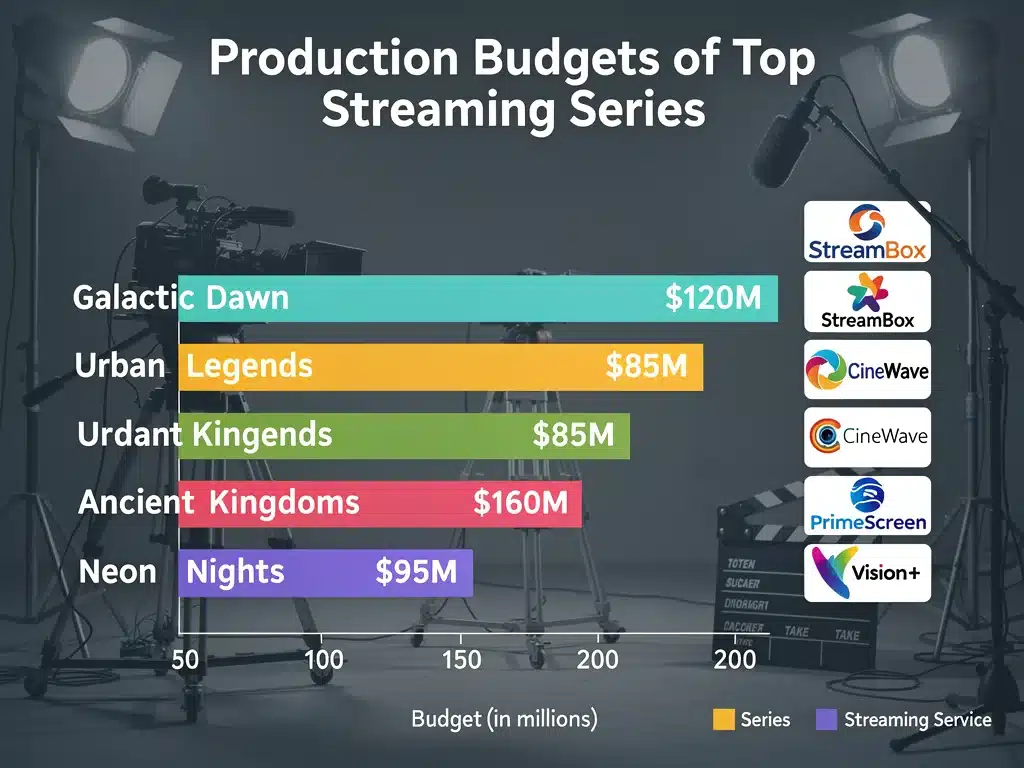
As 2026 approaches, several highly anticipated series are already making headlines for their colossal production budgets, signaling the industry’s commitment to delivering cinematic experiences on the small screen. These financial commitments reflect not only ambitious storytelling but also the cutting-edge technology and talent involved. The scale of these projects highlights the ongoing impact of Streaming Services.
These budgets often cover extensive visual effects, elaborate set designs, international filming locations, and a roster of A-list actors and creators. The goal is to create spectacle and immersion that rivals or even surpasses traditional blockbuster films. This push for premium content is a direct response to consumer demand for high-quality entertainment.
The following examples illustrate the significant financial outlay streaming giants are making to secure their positions in the competitive market. These series are poised to become tentpole attractions for their respective platforms. They are prime examples of the substantial Streaming Services that are defining the industry’s future.
Series 1: “Crimson Nexus” (Netflix) – Estimated Budget: $250 Million
Netflix’s “Crimson Nexus” is rumored to be one of their most expensive productions to date, with an estimated budget of $250 million for its first season. This high-concept sci-fi epic, set in a dystopian future, promises groundbreaking visual effects and a star-studded ensemble cast. The ambitious scale aims to create a global phenomenon, justifying the immense cost.
The series will reportedly feature extensive virtual production techniques and intricate world-building, requiring significant investment in pre-production and post-production. Netflix’s strategy with such a large budget is to deliver a must-watch event that can compete with other major franchises. This is a clear indicator of Streaming Services.
Sources close to the production suggest that a significant portion of the budget is allocated to securing top-tier showrunners and writers known for their expansive storytelling. The series is expected to define Netflix’s original content strategy for the mid-2020s, solidifying its position as a leader in premium entertainment.
Series 2: “The Obsidian Throne” (HBO Max) – Estimated Budget: $200 Million
HBO Max is reportedly pouring $200 million into “The Obsidian Throne,” a sprawling fantasy drama designed to be its next big tentpole series. Following the success of prior fantasy epics, this production aims to captivate audiences with its intricate political intrigue and vast mythical world. This substantial investment reflects HBO Max’s commitment to high-quality, serialized storytelling.
The budget accounts for elaborate costume design, large-scale battle sequences, and a diverse international cast filming across multiple continents. The expectation is that “The Obsidian Throne” will generate significant cultural buzz and critical acclaim. Such projects are vital for HBO Max’s brand identity and subscriber loyalty, showcasing the impact of Streaming Services.
Industry analysts believe that the series’ success is crucial for HBO Max’s long-term strategy in the competitive streaming wars. The network is leveraging its reputation for prestige television to attract and retain discerning viewers. This strategic outlay highlights the ongoing efforts to dominate the premium content landscape.
The Strategic Motivations Behind Budgetary Escalation
The rising production budgets are not solely a matter of creative ambition; they are deeply intertwined with complex business strategies designed for market dominance. Platforms are calculating that a few mega-hits can generate more value than numerous mid-tier productions. This focus on blockbusters drives a significant portion of Streaming Services.
Exclusivity is a powerful draw, compelling viewers to subscribe to a particular service to access a specific show. When a series becomes a cultural phenomenon, it creates a powerful incentive for new subscriptions and reduces churn among existing users. This direct correlation between content quality and subscriber metrics justifies the high costs.
Moreover, the global reach of streaming means that a successful series can attract audiences from every corner of the world, making the investment scalable. The potential for international syndication and licensing deals further enhances the return on these massive content outlays. These factors collectively explain the immense Streaming Services.
Talent Acquisition and Creative Freedom
Attracting top-tier talent, both in front of and behind the camera, often requires hefty financial incentives, contributing significantly to production budgets. Renowned actors, directors, and showrunners command higher salaries, but their involvement can elevate a project’s profile and guarantee a certain level of quality. This competition for talent is a key factor in Streaming Services.
Furthermore, streaming services often offer creators greater creative freedom and larger budgets than traditional television networks. This environment fosters ambitious storytelling and allows for projects that might not otherwise see the light of day. This combination of talent and creative liberty is a powerful magnet for compelling content.
The ability to tell complex, long-form stories without the constraints of commercial breaks or strict runtime limits also appeals to many creators. This freedom, coupled with substantial financial backing, makes streaming platforms attractive homes for groundbreaking series. It’s a strategic move to secure the best creative minds in the industry.
Technological Advancements and Production Values
Modern television production increasingly leverages cutting-edge technology, from advanced CGI and virtual production to sophisticated sound design and cinematography. These technological enhancements are expensive but crucial for delivering the immersive, cinematic experience that modern audiences expect. This technological arms race is a major component of Streaming Services.
The desire to create visually stunning worlds and realistic effects means investing in state-of-the-art equipment and highly specialized technicians. This commitment to high production values ensures that streaming series can compete with big-screen blockbusters in terms of spectacle and polish. The technical demands alone can drive budgets sky-high.
As consumer displays become more advanced, with 4K and even 8K resolutions becoming common, the pressure to produce content that looks exceptional on these screens intensifies. Streaming services are acutely aware of this and are investing accordingly to future-proof their libraries. This focus on fidelity is a core aspect of contemporary production budgets.
Major Players and Their 2026 Content Strategies
Different streaming giants employ varied strategies when it comes to their content investments, though all share the common goal of attracting and retaining subscribers. Analyzing these approaches provides insight into how they plan to navigate the competitive landscape in 2026. The diversity in these plans reflects the nuanced priorities within Streaming Services.
Netflix, for instance, continues its high-volume, global approach, while Disney+ leverages its vast IP catalog to create interconnected universes. Amazon Prime Video often focuses on a few extremely high-budget, tentpole productions, and Apple TV+ prioritizes prestige dramas with A-list talent. Each strategy has its strengths and weaknesses in the battle for viewership.
These tailored strategies reflect their corporate parents’ broader objectives and their target demographics. Understanding these distinct content philosophies is key to predicting the future direction of the streaming market. The varied approaches underscore the dynamic nature of Streaming Services.
Series 3: “Echoes of Alpha Centauri” (Amazon Prime Video) – Estimated Budget: $180 Million
Amazon Prime Video’s “Echoes of Alpha Centauri” is set to be a groundbreaking space opera with an estimated budget of $180 million. Known for its ambitious, high-cost projects, Amazon aims to deliver a visually spectacular series that expands its sci-fi offerings. This reflects their strategy of investing heavily in a few major productions to draw global attention.
The series is expected to feature extensive practical effects alongside cutting-edge CGI to create believable alien worlds and advanced spacecraft. Amazon’s investment in such a large-scale project demonstrates its commitment to competing at the highest level of premium content. This is another prime example of the vast Streaming Services.
With a focus on epic storytelling and world-building, “Echoes of Alpha Centauri” is positioned to be a major draw for Prime Video subscribers. The series will likely leverage Amazon’s ecosystem for cross-promotion and merchandise, maximizing its overall impact and profitability.
Series 4: “The Chronos Protocol” (Apple TV+) – Estimated Budget: $150 Million
Apple TV+ is reportedly allocating $150 million to “The Chronos Protocol,” a sophisticated spy thriller known for its intricate plot and high production values. Apple’s strategy often involves fewer, highly polished projects that emphasize quality over quantity, attracting discerning viewers. This selective approach is a hallmark of their Streaming Services.
The series will feature an acclaimed director and a cast of award-winning actors, reflecting Apple’s focus on prestige content. Filming locations are expected to span multiple international cities, adding to the authenticity and visual grandeur of the production. Apple TV+ aims to solidify its reputation as a home for cinematic television.
“The Chronos Protocol” is designed to generate critical buzz and attract subscribers seeking premium, ad-free viewing experiences. Apple’s commitment to high budgets for relatively fewer titles showcases a different path in the streaming wars, one that prioritizes a curated, high-end library.
The Impact of Budgets on Storytelling and Production
The sheer scale of these budgets profoundly impacts every aspect of a series’ development, from the scope of its narrative to the visual fidelity it can achieve. Higher budgets allow for more elaborate storylines, complex character arcs, and the ability to realize ambitious creative visions without compromise. This directly influences the quality and depth of content resulting from Streaming Services.
With more financial resources, productions can afford longer shooting schedules, extensive post-production, and the use of cutting-edge special effects. This translates into a more polished and immersive viewing experience for audiences. It also enables creators to take bigger risks and explore more unconventional narratives.
Ultimately, these massive investments are about pushing the boundaries of what television can be, blurring the lines between film and episodic content. The aim is to deliver cinematic quality directly to viewers’ homes, a testament to the transformative power of Streaming Services. The industry is evolving rapidly, driven by these financial commitments.
Series 5: “Mythos of the Sunken City” (Disney+) – Estimated Budget: $170 Million

Disney+ is investing an estimated $170 million in “Mythos of the Sunken City,” an adventure series that expands their fantasy universe with a unique, original story. While Disney+ often leverages existing IP, this new venture demonstrates a willingness to invest heavily in fresh narratives. This project is a significant part of Disney+’s Streaming Services.
The series is anticipated to feature extensive underwater cinematography, creature design, and advanced visual effects to bring its fantastical world to life. Disney’s reputation for family-friendly yet sophisticated storytelling will be on full display. The budget allows for a truly immersive experience that appeals to a broad audience.
“Mythos of the Sunken City” aims to create a new franchise for Disney+, diversifying its content beyond Marvel and Star Wars. This strategic expansion is crucial for capturing new demographics and maintaining subscriber growth. It underscores the importance of original content in a competitive market.
Future Outlook: Sustainability and Evolution of Streaming Budgets
The current trajectory of escalating production budgets raises questions about long-term sustainability and the future evolution of streaming content. While high investments drive subscriber growth now, the market may eventually reach a saturation point. This forces platforms to continually re-evaluate their Streaming Services and beyond.
Industry experts are debating whether the current spending spree is sustainable or if a correction is inevitable. Factors like increasing subscription costs, password sharing crackdowns, and advertising-supported tiers could influence future budgetary decisions. The balance between investment and profitability remains a critical challenge for all players.
Innovation in production techniques, such as virtual production and AI-assisted content creation, could potentially optimize budgets without sacrificing quality. The future of streaming content will likely involve a blend of massive tentpole productions and more cost-effective, yet compelling, niche programming. The landscape of Streaming Services is still very much in flux.
| Key Investment Area | Strategic Rationale |
|---|---|
| Original Content Development | Drives subscriber acquisition and retention through exclusive, compelling narratives. |
| High Production Values | Elevates viewing experience, competes with theatrical releases, and attracts top talent. |
| Global & Localized Content | Expands market reach and resonates with diverse international audiences. |
| Intellectual Property (IP) Ownership | Secures long-term assets, allows for spin-offs and ancillary revenue streams. |
Frequently Asked Questions About Streaming Investments
Streaming services spend heavily to attract and retain subscribers in a highly competitive market. Exclusive, high-quality original content differentiates platforms, reduces churn, and creates brand loyalty. It’s a strategic move to secure market share and build a unique content library that can’t be found elsewhere.
Larger budgets allow for more elaborate storytelling, superior visual effects, top-tier talent, and longer production timelines. This generally results in higher production values, more immersive worlds, and cinematic quality that rivals feature films. It empowers creators to realize ambitious visions without financial constraints.
The sustainability of current spending levels is a subject of ongoing debate. While effective for growth, market saturation and increasing operational costs may necessitate adjustments. Platforms are exploring various strategies, including ad-supported tiers and careful budget optimization, to ensure long-term viability and profitability.
Global markets are crucial. Investing in localized content and international productions helps platforms penetrate new territories and attract diverse audiences worldwide. Successful global hits, like “Squid Game,” demonstrate the immense return on investment from content that resonates across cultural boundaries, expanding subscriber bases significantly.
Success is measured by various metrics, including new subscriber sign-ups, reduced churn rates, total viewing hours, critical acclaim, and cultural impact. A series’ ability to generate buzz and become a flagship title for the platform is also vital. Ultimately, it’s about the return on investment in terms of sustained audience engagement and brand value.
Looking Ahead: The Evolving Landscape of Streaming Content
The significant Streaming Services highlight an industry in constant evolution, where content is king and budgets reflect artistic ambition and strategic necessity.
The focus on high-quality, exclusive series will continue to shape how we consume entertainment, pushing creative and technological boundaries.
As platforms vie for global dominance, the viewer ultimately benefits from an unprecedented array of premium productions, making the future of streaming an exciting prospect to watch.