Future of Television: 3 Innovative Storytelling Techniques
The Future of Television Storytelling is undergoing a profound transformation, with new series premiering this winter showcasing groundbreaking narrative techniques.
This analysis by SpoilerNew.com explores three innovative approaches redefining the medium: deeply immersive experiences, non-linear plots, and audience-interactive elements.
Moving beyond passive consumption, these advancements are pushing creative boundaries and setting new standards for how stories are crafted and experienced in the digital age.
Immersive Storytelling: Beyond the Screen
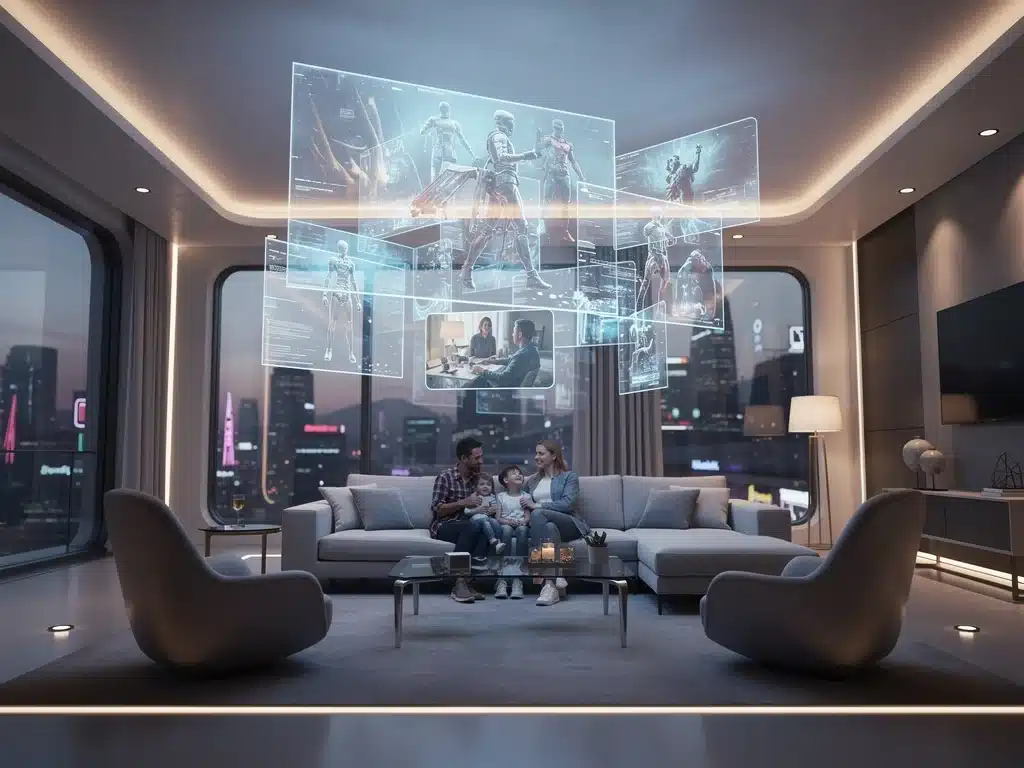
One of the most compelling trends shaping the Future of Television Storytelling is the move towards deeply immersive experiences.
These series are designed to pull viewers directly into their worlds, blurring the lines between observer and participant. This is achieved through various sophisticated production techniques and narrative structures.
Creators are leveraging advanced visual effects, sound design, and character development to build environments that feel tangible and alive.
The goal is to create a sense of presence, making the audience feel as though they are part of the unfolding drama. This shift represents a significant evolution from traditional passive viewing.
New series this winter are demonstrating this immersion not just visually, but also emotionally.
They craft narratives that resonate on a deeper level, often exploring complex psychological landscapes and moral dilemmas. This approach demands a more engaged viewer, willing to invest in the world presented before them.
The Rise of Sensory Engagement
Sensory engagement is at the forefront of this immersive revolution, with series meticulously crafting every detail to enhance the viewer’s experience.
From intricate costume designs to authentic set pieces, every element contributes to building a believable universe. Soundscapes are particularly crucial, often employing spatial audio to place viewers directly within the scene.
The integration of advanced CGI and practical effects creates seamless visual environments that feel expansive and lived-in.
This dedication to detail ensures that the fictional world feels as real as possible, drawing the audience deeper into its intricacies. It’s about creating a holistic sensory journey.
- Detailed world-building through production design and visual effects.
- Advanced sound engineering, including spatial audio, for enhanced realism.
- Emphasis on character internal monologues and subjective camera angles.
- Use of haptic feedback in companion apps to extend immersion.
Narrative Depth and Empathy
Beyond technical prowess, immersive storytelling also thrives on narrative depth, fostering strong emotional connections with characters.
These series often delve into the backstories and motivations of their protagonists with unprecedented detail. This allows viewers to develop a profound sense of empathy, making character journeys intensely personal.
The narratives are often constructed to reveal information gradually, mirroring real-life discovery and encouraging viewers to actively piece together events.
This slow-burn approach, combined with rich character arcs, enhances the feeling of being truly present in the story. It transforms watching into an act of shared experience.
This focus on emotional resonance is a key differentiator, moving beyond simple plot progression to explore the human condition within fantastical or dramatic settings.
The Future of Television Storytelling relies heavily on this ability to connect with audiences on a deeply personal level, making each viewing experience unique.
Non-Linear Narratives: Reshaping Time and Perspective
Another powerful technique redefining the Future of Television Storytelling is the widespread adoption of non-linear narratives.
Moving away from chronological order, these series present events out of sequence, forcing viewers to actively construct the timeline and meaning. This challenges conventional viewing habits and demands greater cognitive engagement.
This approach often involves multiple timelines, flashbacks, flash-forwards, or parallel story arcs that eventually converge.
The deliberate fragmentation of the narrative serves to build suspense, reveal character complexities, and offer fresh perspectives on familiar tropes. It transforms the act of watching into a puzzle-solving endeavor.
New series this winter are expertly weaving these fractured narratives, creating intricate tapestries that reward close attention and re-watching.
This technique is particularly effective in genres that explore mystery, psychological drama, or complex historical events, allowing for a more nuanced exploration of cause and effect.
Fragmented Timelines and Character Development
Fragmented timelines are a cornerstone of modern non-linear storytelling, allowing creators to explore character development in innovative ways.
By presenting pivotal moments from different points in a character’s life, series can reveal motivations and consequences with greater impact. This often involves juxtaposing past decisions with present dilemmas.
This method allows for a deeper dive into the psychological states of characters, showing how past experiences shape their current actions without explicitly stating the connection.
Viewers are invited to connect the dots, fostering a more intimate understanding of the characters’ evolution. It’s a powerful tool for building complex, multi-dimensional personalities.
The strategic placement of these fragmented pieces ensures that each reveal adds another layer to the character’s journey, enriching the overall narrative.
The Future of Television Storytelling benefits immensely from this ability to manipulate time for profound character insights.
- Interweaving past, present, and future events to reveal character depth.
- Using flashbacks and flash-forwards to build suspense and thematic resonance.
- Employing multiple perspectives on a single event to challenge viewer assumptions.
- Narrative loops and recurring motifs that gain new meaning with each viewing.
Thematic Resonance through Disjointed Plots
Non-linear narratives excel at enhancing thematic resonance by allowing creators to draw connections that might be less apparent in a strictly chronological story.
By placing seemingly disparate events side-by-side, new meanings and thematic parallels emerge. This encourages viewers to look beyond the surface plot.
This technique can highlight recurring themes, moral ambiguities, or societal issues by presenting them from various angles and temporal contexts.
It allows for a more profound meditation on complex ideas, as the audience is constantly re-evaluating events based on newly revealed information. The narrative becomes a canvas for deeper philosophical inquiry.
The disjointed nature of the plot paradoxically creates a stronger, more cohesive thematic core, as viewers actively search for the underlying messages.
This intelligent design is a hallmark of the sophisticated Future of Television Storytelling emerging today, offering a richer intellectual experience.
Audience Interaction: The Viewer as Participant
The third significant innovation transforming the Future of Television Storytelling is the integration of audience interaction.
No longer content with passive viewing, modern series are finding ways to involve audiences directly in the narrative, offering choices that can influence plot developments or character outcomes. This represents a paradigm shift in engagement.
This interaction can range from subtle second-screen experiences to more overt branching narratives where viewer decisions dictate the story’s path.
These techniques tap into the desire for agency, making the audience feel like an integral part of the creative process. It transforms entertainment consumption into an active, collaborative endeavor.
New series this winter are experimenting with various forms of interactivity, pushing the boundaries of what a television show can be.
This trend acknowledges the smartphone-native generation’s expectation for personalized and responsive media, further cementing the interactive element as a core component of the viewing experience.
Branching Narratives and Viewer Choices
Branching narratives are perhaps the most direct form of audience interaction, giving viewers explicit choices that alter the story’s progression.
This technique, popularized in video games, is now making significant inroads into television, offering multiple pathways and endings. Each decision can lead to vastly different outcomes, enhancing replayability.
These shows are meticulously crafted to account for various choices, requiring complex writing and production pipelines.
The appeal lies in the personalized experience, as viewers can explore different facets of the story based on their own moral compass or curiosity. It’s a powerful way to foster deep engagement and ownership of the narrative.
The challenge lies in maintaining narrative coherence across multiple branches, yet the reward is a highly individualized viewing journey.
This direct influence on the plot is a defining characteristic of the evolving Future of Television Storytelling, moving beyond a single, fixed storyline.
- Direct viewer choices influencing plot points and character fates.
- Second-screen applications offering supplementary content and polls.
- Social media integration for real-time audience feedback and theory crafting.
- Personalized viewing paths based on user profiles or past interactions.
Second-Screen Experiences and Community Building
Even when direct narrative choices aren’t present, second-screen experiences are significantly enhancing audience interaction and community building.
These companion apps or web platforms offer supplementary content, polls, quizzes, and live discussions that run parallel to the main broadcast. They provide deeper context and foster a shared viewing experience.
This approach allows viewers to delve further into the show’s lore, explore character backgrounds, or participate in real-time reactions with other fans.
It transforms a solitary activity into a communal one, creating vibrant online communities centered around the series. This extends the life of the show beyond its airtime, keeping audiences engaged.
The ability to connect with fellow fans and access exclusive content through a second screen enriches the overall experience.
This strategic use of technology for community engagement is a clever aspect of the Future of Television Storytelling, building loyalty and expanding the narrative universe.
The Blurring Lines: Convergence of Media
The innovative storytelling techniques discussed are not operating in isolation; they are part of a larger trend towards the convergence of media.
Television series are increasingly adopting elements from video games, interactive fiction, and even augmented reality. This blending creates hybrid forms of entertainment that defy traditional categorization.
This convergence enables creators to tell stories in ways previously unimaginable, leveraging the strengths of different platforms.
A television series might have an accompanying game that expands its lore, or an AR experience that brings its characters into the viewer’s living room. The boundaries of what constitutes a ‘show’ are expanding rapidly.
This interdisciplinary approach is crucial for the Future of Television Storytelling, as it allows for multi-faceted narratives that cater to diverse audience preferences.
It’s about creating an ecosystem of content around a central story, offering multiple points of entry and engagement for fans.
Technological Advancements Driving Innovation
Underpinning these new storytelling techniques are significant technological advancements. High-speed internet, powerful streaming platforms, and sophisticated production tools are making these complex narratives possible.
Without these foundational technologies, many of the immersive and interactive elements would simply be unachievable.
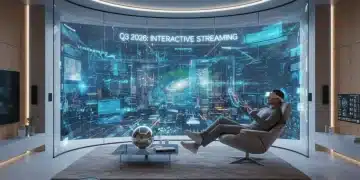
The evolution of AI and machine learning also plays a role, particularly in systems that adapt narratives based on viewer input or personalize content.
These technologies are providing creators with unprecedented control and flexibility in crafting nuanced experiences. They are the silent engines powering the revolution in television.
As technology continues to evolve, we can expect even more radical innovations in the Future of Television Storytelling.
The capacity for greater realism, deeper interactivity, and personalized narratives will only expand, pushing creative boundaries further than ever before. It’s an exciting time for both creators and consumers.
The Evolving Role of the Viewer
With these innovative techniques, the role of the viewer is fundamentally changing from passive observer to active participant.
Audiences are no longer just consuming content; they are increasingly shaping it, interpreting it, and even influencing its direction. This shift empowers viewers and deepens their connection to the narrative.
This active engagement fosters a sense of ownership and investment in the story, transforming the viewing experience into something more personal and memorable.
Viewers become co-conspirators in the narrative, rather than mere spectators. This elevated role is a defining characteristic of modern television consumption.
The Future of Television Storytelling recognizes this evolving relationship, crafting experiences that are designed to be explored and interacted with, rather than simply watched.
This collaborative spirit between creators and audiences is driving much of the current innovation in the industry.
Challenges and Opportunities for Creators
While these innovative storytelling techniques offer immense creative opportunities, they also present significant challenges for creators.
Developing complex non-linear narratives or interactive experiences requires substantial resources, intricate planning, and a deep understanding of audience psychology. The traditional production model is being rethought.
Writers must craft multiple storylines, directors must manage diverse visual paths, and producers must navigate complex technical demands.
However, the rewards—in terms of audience engagement and critical acclaim—can be substantial. These challenges are pushing the boundaries of creative and technical expertise in the industry.
For those willing to embrace these complexities, the Future of Television Storytelling offers a vast canvas for unparalleled creative expression.
It’s a landscape ripe with potential for groundbreaking work that redefines the art form, attracting new talent and pushing the medium forward.
Impact on Traditional Broadcast Models
The rise of these innovative storytelling techniques also has a profound impact on traditional broadcast models.
Linear, scheduled programming struggles to accommodate the demands of non-linear or interactive content. Streaming platforms, with their on-demand nature and technical flexibility, are ideally suited to host these new forms of television.
This shift accelerates the migration of premium content away from conventional networks towards streaming services, which can offer the infrastructure and freedom required for such ambitious projects.
It forces traditional broadcasters to innovate or risk being left behind in the evolving entertainment landscape.
The Future of Television Storytelling is intrinsically linked to the platforms that can best support its ambitions.
Streaming services are proving to be the fertile ground where these new narrative forms can truly flourish, driving further competition and innovation in content delivery.
| Key Technique | Brief Description |
|---|---|
| Immersive Storytelling | Deeply engaging narratives using advanced visuals and sound to draw viewers into the world. |
| Non-Linear Narratives | Stories presented out of chronological order, demanding active viewer participation to connect events. |
| Audience Interaction | Viewers directly influence plot or engage with content via second-screen experiences. |
| Media Convergence | Blending elements from games and AR with traditional TV for hybrid entertainment forms. |
Frequently Asked Questions About the Future of Television Storytelling
Immersive storytelling in new TV series is characterized by an intense focus on sensory engagement, detailed world-building, and strong emotional connections with characters. Advanced visual effects, spatial audio, and deep character development work together to make viewers feel an integral part of the narrative world.
Non-linear narratives significantly increase viewer engagement by presenting events out of chronological order, requiring audiences to actively piece together the story. This challenges traditional viewing habits, builds suspense, and allows for deeper thematic exploration, rewarding careful attention and fostering analytical thought.
Audience interaction in modern television encompasses various forms, including branching narratives where viewers make choices that affect the plot. Additionally, second-screen experiences through apps or websites offer supplementary content, polls, and real-time community discussions, transforming passive viewing into active participation.
Streaming platforms are crucial because their on-demand nature and technical flexibility can support the complexities of non-linear and interactive content. Unlike traditional broadcast models, streaming services provide the infrastructure necessary for branching narratives, extensive supplementary content, and personalized viewing experiences.
The long-term impact on television production includes a demand for more complex writing, advanced technical pipelines, and interdisciplinary creative teams. It pushes creators to rethink traditional storytelling models, fostering innovation and leading to a convergence of media forms, ultimately reshaping the entire entertainment landscape.
Looking Ahead: The Evolving Narrative Landscape
The innovative storytelling techniques emerging in new series this winter signal a definitive shift in the Future of Television Storytelling.
These developments are not isolated experiments but rather foundational changes that will collectively redefine how audiences engage with narrative content.
The emphasis on immersion, non-linearity, and interaction points to a future where television is more personalized, dynamic, and collaborative.
As technology continues to advance, we can anticipate even more sophisticated integrations of these elements, leading to experiences that blur the lines between reality and fiction, and between viewer and creator.
The industry is moving towards a model where stories are not just told, but actively lived and shaped by their audiences. This evolution promises a richer, more engaging entertainment landscape for everyone involved.
For those following the trends in entertainment, observing how these techniques evolve and combine will be key to understanding the next wave of groundbreaking series.
The current season is merely a glimpse into a much larger transformation, confirming that the art of television storytelling is entering a thrilling new era of innovation and engagement.