Interactive Streaming Evolution: New Features by Q3 2026
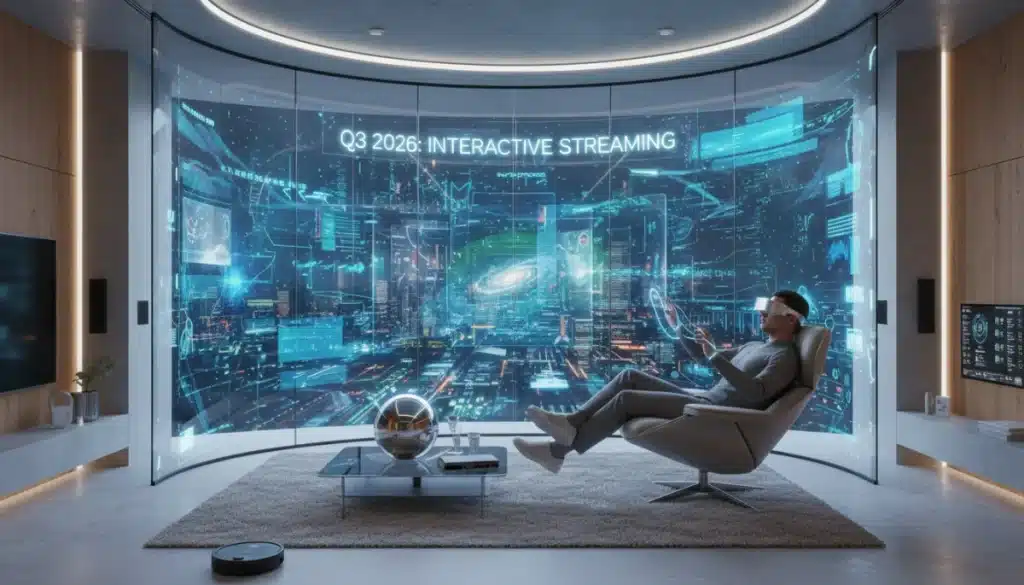
In 2026, interactive streaming is undergoing a paradigm shift, moving from passive consumption to an active “co-creation” model.
As we approach Q3, two transformative features are taking center stage: AI-driven branching narratives that adapt story beats to real-time viewer biometrics and low-latency AR overlays that bridge digital content with physical spaces.
This evolution, fueled by edge computing and sub-500ms delivery, is redefining storytelling and community engagement, turning viewers into active participants who influence the trajectory of their favorite franchises in real-time.
The Impending Shift: Beyond Passive Viewing
The traditional model of passive content consumption is rapidly becoming a relic of the past, as the interactive streaming evolution drives new engagement paradigms.
Viewers are no longer content with merely watching; they demand agency, personalization, and a sense of belonging within their chosen entertainment.
This shift is fueling the development of features that empower audiences to directly influence their viewing experience.
This demand for active participation is not a fleeting trend but a fundamental change in viewer behavior.
Platforms that fail to adapt risk falling behind in an increasingly competitive market where novelty and engagement are key differentiators.
The forthcoming features are designed precisely to meet these evolving expectations, embedding interactivity at the core of the streaming experience.
The impact extends beyond mere entertainment, touching upon educational content, live events, and even brand interactions.
As the lines blur between content and experience, the ability to interact directly with narratives and creators becomes paramount, shaping the future trajectory of digital media.
Deep Personalization Engines: Tailoring Content in Real-Time
One of the most anticipated breakthroughs in the interactive streaming evolution is the emergence of advanced deep personalization engines.
These systems will leverage sophisticated AI and machine learning algorithms to offer hyper-tailored content, not just in recommendations but within the narratives themselves, adapting to individual viewer preferences and behaviors in real-time.
Imagine a scenario where a storyline subtly shifts based on your emotional responses detected through biometric data, or where character choices reflect your historical viewing patterns.
This level of personalization moves beyond simple genre suggestions, creating a truly unique and evolving narrative for each viewer. The goal is to make every viewing session feel singularly crafted.
This technology promises to address the paradox of choice, where an abundance of content can lead to decision fatigue.
By intuitively understanding and anticipating viewer desires, these engines will streamline content discovery and enhance satisfaction, ensuring that audiences are always presented with experiences most likely to resonate with them.
Adaptive Storytelling Frameworks
- Branching narratives that dynamically adjust plot points based on viewer input or detected preferences.
- Character development arcs that can be influenced by collective audience sentiment or individual choices.
- Procedural content generation that creates unique scenes or dialogue moments for each user.
The implementation of adaptive storytelling frameworks will allow creators to design narratives with multiple potential trajectories.
This means that a single piece of content can offer a multitude of experiences, significantly increasing replayability and fostering a deeper connection between the viewer and the story.
The complexity lies in managing these interwoven paths while maintaining narrative coherence.
These frameworks will necessitate new tools and methodologies for content production, requiring writers and directors to think in non-linear terms.
The investment in such creative infrastructure highlights the industry’s commitment to this future. The interactive streaming evolution is not just about technology; it is about reinventing the art of storytelling for a digital age.
Real-time Co-Creation & Augmented Reality Overlays: Bridging Worlds
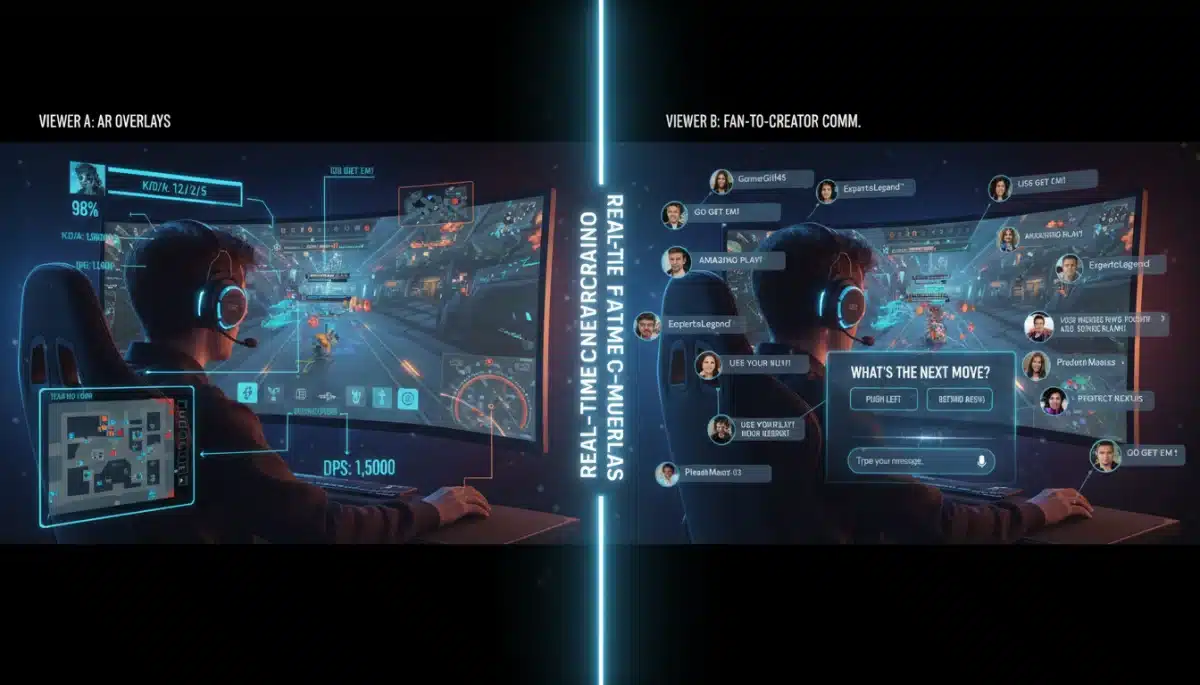
The second transformative feature driving the interactive streaming evolution involves real-time co-creation tools integrated with augmented reality (AR) overlays.
This innovation will allow viewers to not only influence content but also actively contribute to it, often in conjunction with live events or ongoing narratives, blurring the lines between audience and creator.
Picture attending a live concert where you can vote on the next song, suggest stage effects, or even have your fan art projected onto virtual screens within the AR environment.
This level of participation transforms passive observation into a dynamic, shared creative endeavor. The immediacy of feedback and contribution fosters a powerful sense of community and ownership.
AR overlays will further enhance this experience by providing contextual information, interactive elements, and personalized digital enhancements directly within the viewer’s physical space.
This could range from virtual statistics popping up during a sports broadcast to interactive digital characters appearing in your living room during a narrative show. The possibilities are vast and deeply immersive.
Enhanced Viewer Participation Models
- Direct voting mechanisms for live event outcomes or narrative choices, with immediate visual feedback.
- User-generated content integration, allowing viewers to submit elements that appear in the stream.
- Fan-to-creator communication channels that enable direct, real-time interaction during broadcasts.
These participation models are designed to elevate viewer engagement by giving them a tangible voice and presence within the content.
The challenge lies in moderating and integrating these contributions seamlessly without disrupting the overall experience. Platforms are investing heavily in AI-driven moderation systems to manage this influx of user interaction effectively.
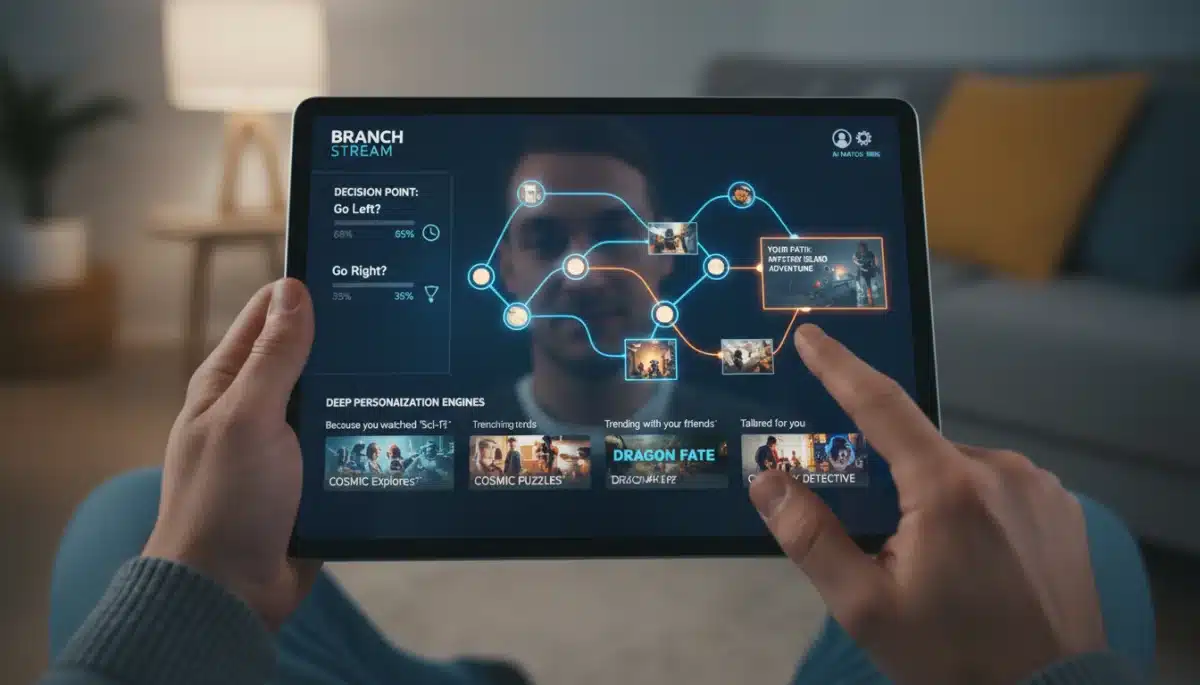
The integration of AR overlays is particularly exciting, as it promises to transform the viewing environment itself.
Instead of merely watching a screen, the content extends into the viewer’s physical surroundings, creating a mixed-reality experience.
This aspect of the interactive streaming evolution is set to fundamentally alter how we perceive and interact with digital media, moving it from a two-dimensional experience to a three-dimensional one.
Technological Underpinnings: AI, 5G, and Cloud Computing
The realization of these advanced interactive features is heavily reliant on significant advancements in underlying technologies.
Artificial intelligence (AI) forms the backbone of deep personalization engines, capable of processing vast amounts of data to predict and adapt content.
The sophistication of these AI models is continuously evolving, enabling more nuanced and instantaneous responses to viewer input.
The rollout of 5G networks provides the necessary low-latency, high-bandwidth connectivity to support real-time interactivity and high-fidelity AR experiences.
Without 5G, the seamless integration of user input and instantaneous content modification would be technically challenging, if not impossible. This network infrastructure is a critical enabler for the next phase of the interactive streaming evolution.
Cloud computing infrastructure also plays a crucial role, providing the scalable processing power and storage needed to manage complex interactive narratives and real-time data streams.
The ability to render and deliver personalized content on demand, to millions of users simultaneously, requires robust and distributed cloud resources.
These technological pillars collectively create the foundation for the future of interactive streaming.
The Business Implications: New Monetization and Engagement Strategies
The advent of these new features presents significant business implications for content providers and advertisers.
The increased engagement fostered by deep personalization and co-creation tools can lead to higher subscriber retention rates and a more loyal audience base.
This deeper connection with content translates into a more valuable customer relationship, moving beyond simple subscription models.
New monetization opportunities will emerge, such as premium access to enhanced interactive features, exclusive co-creation experiences, or even micro-transactions for personalized content elements.
Advertisers can also leverage these interactive environments for more targeted and engaging campaigns, moving away from intrusive ads to integrated, interactive brand experiences that resonate with the viewer.
Furthermore, the data generated by these highly interactive experiences will be invaluable.
Understanding viewer preferences at such a granular level allows for more informed content development, marketing strategies, and platform improvements.
This data-driven approach is a key component of the ongoing interactive streaming evolution, providing a competitive edge in a crowded market.
Challenges and Ethical Considerations in Interactive Streaming
While the promise of these new interactive features is immense, their implementation is not without challenges and ethical considerations.
Data privacy stands as a paramount concern, particularly with deep personalization engines that collect extensive user behavior and potentially biometric data.
Transparent data handling practices and robust security measures will be essential to build and maintain user trust.
The potential for content manipulation or the spread of misinformation through co-creation tools also requires careful consideration.
Platforms must develop stringent moderation policies and advanced AI-driven content filtering to prevent misuse and ensure a safe, positive environment for all participants.
Balancing creative freedom with responsible content governance is a delicate act within the interactive streaming evolution.
Moreover, the digital divide could be exacerbated if access to these advanced features is limited by technological requirements or subscription costs.
Ensuring equitable access and preventing a two-tiered viewing experience will be an important societal challenge.
Addressing these ethical and practical hurdles collaboratively across the industry will be crucial for the sustainable growth of interactive streaming.
Preparing for the Future: What Viewers and Creators Can Do
For viewers, preparing for this next phase of the interactive streaming evolution involves staying informed about new platform capabilities and experimenting with early interactive offerings.
Engaging with content that allows for choice and participation will help shape future developments, as platforms respond to user feedback and adoption rates. Exploring AR applications and understanding their potential can also enhance readiness.
Content creators, on the other hand, should begin exploring non-linear storytelling techniques and familiarizing themselves with interactive production tools.
Collaborating with technologists and experimenting with prototypes will be key to harnessing the full potential of deep personalization and co-creation. The creative landscape is broadening, and those who adapt early will be best positioned to thrive.
Investing in skill development related to AI-driven content design, AR development, and community management will be crucial for creators.
The traditional roles in media production are evolving, requiring a more interdisciplinary approach. The interactive streaming evolution demands innovation not just in technology, but in creative processes and collaborative frameworks.
The Regulatory Landscape and Industry Standards
As the evolution of interactive streaming accelerates, the regulatory landscape will inevitably need to adapt.
Governments and industry bodies will face the task of establishing new standards for data privacy, content moderation, and accessibility in these highly dynamic environments.
This will likely involve international cooperation, given the global nature of streaming platforms.
Discussions around content ownership and intellectual property will also become more complex with co-creation features.
Defining clear guidelines for user-generated contributions and their integration into professional content will be essential to protect both creators and platforms.
The legal frameworks supporting traditional media may prove insufficient for these novel interactive models.
Industry standards for interoperability and cross-platform experiences will also be crucial for fostering a healthy ecosystem.
Ensuring that interactive content can be accessed and enjoyed across various devices and platforms will prevent fragmentation and promote wider adoption.
Collaboration among tech companies and content providers will be vital in setting these benchmarks for the future of interactive streaming.
| Key Feature | Impact on Viewer Experience |
|---|---|
| Deep Personalization Engines | Real-time content adaptation, unique narrative paths, hyper-tailored recommendations. |
| Real-time Co-Creation | Direct viewer contribution to live events and narratives, fostering community. |
| Augmented Reality Overlays | Immersive digital enhancements extending content into the physical viewing space. |
| Enhanced Engagement | Higher viewer retention, new monetization models, valuable user data insights. |
Frequently Asked Questions About Interactive Streaming Evolution
The two primary features are advanced deep personalization engines, which tailor content in real-time based on individual viewer preferences, and real-time co-creation tools with augmented reality (AR) overlays, enabling active viewer participation and immersive digital enhancements within the viewing experience.
These transformative features are anticipated to significantly impact and transform the viewer experience by Q3 2026. While some early versions might exist, widespread integration and advanced capabilities are projected to materialize around this timeframe across major streaming platforms.
Deep personalization engines will move beyond simple recommendations to adapt storylines, character choices, and even visual elements in real-time. This means your viewing experience will be uniquely tailored to your tastes and past interactions, making each session more engaging and personally relevant than ever before.
For live events, it means you could vote on outcomes, contribute content that appears on screen, or interact with AR elements projected into your room. This transforms you from a passive observer into an active participant, enhancing community and immersion during concerts, sports, and other live broadcasts.
Key challenges include ensuring data privacy and security with extensive user data collection, effective content moderation for co-created content, and bridging the digital divide to ensure equitable access. Addressing these ethical and practical considerations is crucial for the sustainable growth and success of these new technologies.
Perspectives
The impending transformation driven by the evolution of interactive streaming represents more than just technological upgrades; it signifies a fundamental shift in media consumption.
As Q3 2026 approaches, the industry’s focus on deep personalization and real-time co-creation with AR overlays promises a future where viewers are not just audiences but active participants.
Watching how platforms navigate the ethical and technical complexities while delivering these groundbreaking experiences will be critical in the coming years.
This shift is perhaps most evident in how major conglomerates are merging their physical and digital assets. Industry leaders are now positioning themselves as interconnected ecosystems rather than simple content providers.
A prime example of this strategy is how Disney is evolving into a massive interactive hub connecting movies, parks, and digital experiences to maintain fan engagement across every possible touchpoint.